

self-defense

  • Jury Acquits Mansoor Ali in Cheyenne King Soopers Parking Lot Shooting Case

    Jury Acquits Mansoor Ali in Cheyenne King Soopers Parking Lot Shooting Case

    A Laramie County jury has returned not-guilty verdicts for Mansoor Ali, closing a closely watched case tied to a deadly encounter outside a King Soopers in Cheyenne. Ali, 22, had been on trial in connection with the shooting death of 19-year-old Benjamin Glenn.

    Jurors cleared Ali of second-degree murder, rejecting the prosecution’s claim that the shooting met the elements of that offense. In addition to the homicide charge, the panel also found Ali not guilty on four counts of aggravated assault and battery.

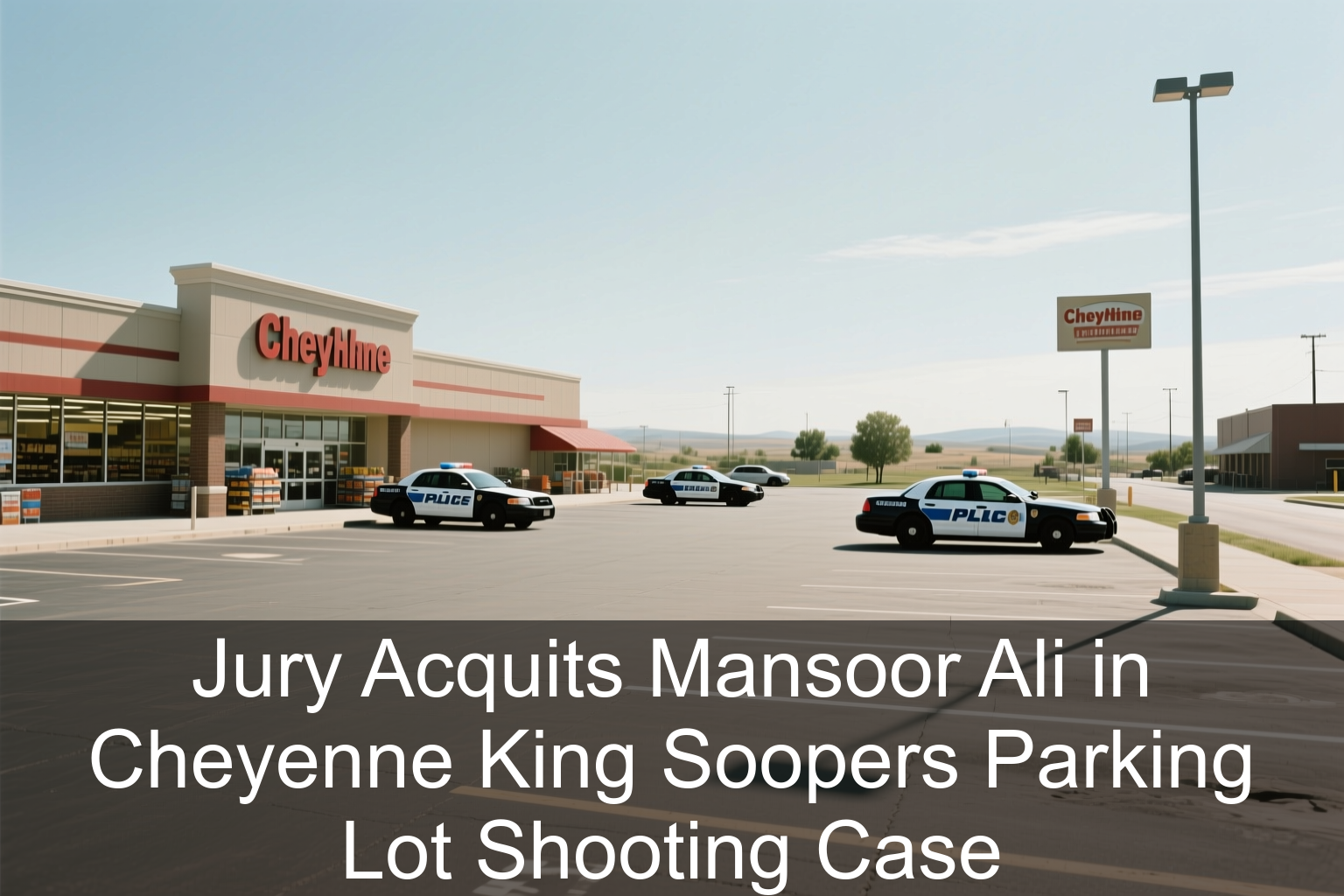
    The case centered on what occurred in the grocery store’s parking lot, where Glenn approached Ali while armed with a firearm. Ali’s defense team argued that the situation presented an immediate threat and that Ali’s decision to shoot was a lawful act of self-defense.

    The verdict followed a high-profile trial that drew significant attention because it involved competing narratives about danger, decision-making in tense moments, and the legal boundaries of defensive force. Ultimately, the jury accepted the self-defense argument offered by Ali’s attorneys.

    For many observers who prioritize individual rights and the principle that citizens should not be punished for protecting themselves when faced with an armed threat, the outcome reinforces the importance of due process and the right to self-defense. With the acquittal on all listed charges, Ali leaves the courtroom without criminal convictions from this incident.

  • Chicago Armed Citizen Stops Gun-Wielding Robbery Attempt

    Chicago Armed Citizen Stops Gun-Wielding Robbery Attempt

    Chicago saw another reminder that criminals do not always get to choose the outcome of their own crimes. In an incident highlighted by Bearing Arms, an armed resident confronted an alleged robber who was reportedly armed, turning what could have been a one-sided threat into a situation where the intended victim had options.

    According to the account, the suspect initiated an attempted robbery while armed. Instead of complying, the targeted individual was also armed and responded with defensive force, disrupting the robbery attempt and forcing the encounter in a different direction than the suspect likely expected.

    The episode underscores a point often lost in political debates about public safety: ordinary people sometimes face immediate danger without the luxury of waiting for a police response. In those moments, the ability to defend oneself can be the difference between becoming a victim and stopping a violent crime in progress.

    Supporters of the right to keep and bear arms argue that lawful carry is not about looking for conflict, but about being prepared for it when it arrives uninvited. Incidents like this are frequently cited as real-world examples that a would-be attacker cannot assume helplessness from the people they target.

    While broader arguments about gun policy tend to revolve around hypotheticals, this Chicago case centers on a concrete event: an armed robbery attempt met by an armed citizen who refused to be victimized. For many advocates of individual liberty and self-defense, it is further evidence that responsible, law-abiding firearm ownership can play a direct role in deterring crime and limiting harm when danger strikes.