

self-defense

  • Hopkins County Homeowner Fires One Shot After Intruder Smashes Glass Front Door, Suspect Dies

    Hopkins County Homeowner Fires One Shot After Intruder Smashes Glass Front Door, Suspect Dies

    A deadly break-in attempt in Hopkins County ended Tuesday morning, May 19, 2026, when a homeowner used a firearm to stop a man forcing his way into the residence. Authorities say the resident fired a single round during the confrontation.

    According to the available account, the intruder became violent at the front entry and began attacking the home’s glass front door. As the man tried to breach the doorway, the homeowner responded with one defensive shot.

    Video from a Ring doorbell camera captured the incident. The recording shows the suspect shouting while repeatedly hitting the glass before the shot is fired.

    The intruder was struck by that single round and later died from the injury. The confrontation occurred as the suspect was actively attempting to get through the front entrance.

    From a self-defense and property-rights perspective, the case underscores why many residents choose to maintain the ability to protect themselves at home when confronted with a forced entry in progress. In this incident, the confrontation was brief, happened at the threshold of the home, and concluded with one shot fired.

  • North Philadelphia Break-In Attempt Ends After Homeowner Shoots Intruder at Rear Window

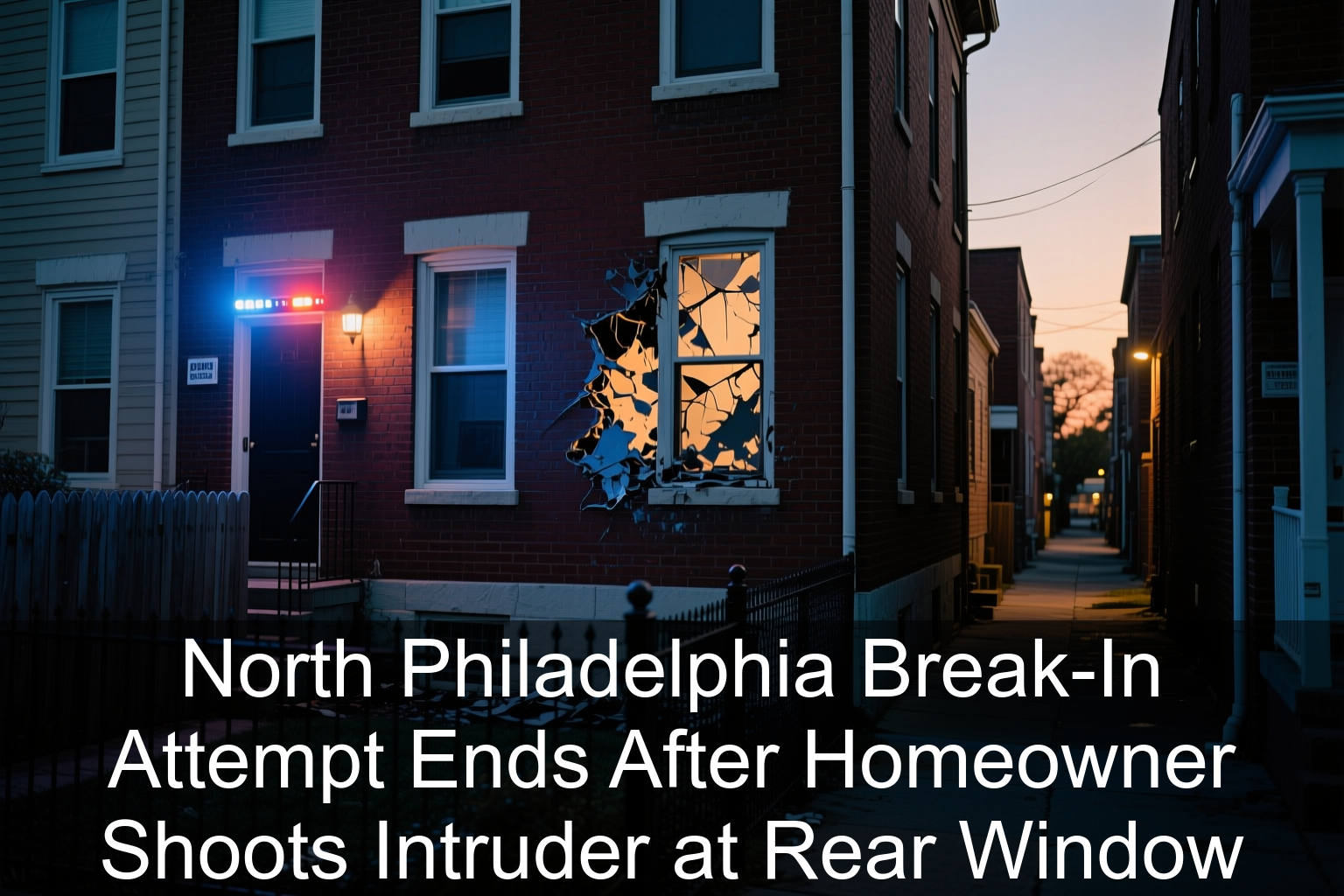
    North Philadelphia Break-In Attempt Ends After Homeowner Shoots Intruder at Rear Window

    A fatal shooting in North Philadelphia on Sunday afternoon, May 3, 2026, followed what police describe as an attempted break-in at an occupied home. Authorities say the incident unfolded at the rear of the residence, where an adult woman was allegedly trying to force her way inside through a back window.

    Philadelphia Police officials reported that the homeowner confronted the attempted entry as it was happening. The resident, whom police believe may be licensed to carry a firearm, reportedly addressed the intruder before any entry was completed.

    According to investigators, the homeowner issued multiple verbal commands telling the woman to stop. Police say the warnings were ignored as the woman continued working to break through the rear window.

    The situation ended when the homeowner fired a shot, striking the woman. Police stated the homeowner’s actions are being treated as self-defense based on the reported circumstances surrounding the attempted forced entry and the ignored warnings.

    The woman died as a result of the gunshot, and the case remains tied to the claim that she was attempting to unlawfully enter an occupied property. The reported details underscore the principle that lawful residents have the right to defend themselves in their homes when confronted with an immediate, unlawful intrusion.

  • New Hampshire Senate Faces Deadline on Campus Carry Vote

    New Hampshire Senate Faces Deadline on Campus Carry Vote

    New Hampshire gun-rights advocates are focusing their attention on the State Senate, urging senators to act immediately on campus carry. Supporters argue that lawmakers have reached a decisive moment and that the next scheduled action is an opportunity to follow through on prior commitments.

    The measure at the center of the dispute involves whether lawful firearm carry should be allowed on college and university property. Backers frame the issue as one of equal rights and personal security, maintaining that adults who can legally carry elsewhere in the state should not lose that ability simply because they step onto a campus.

    According to the call-to-action circulating from advocates, the Senate is expected to take up the campus carry question tomorrow. That timeline has sparked intensified outreach aimed at senators, with supporters pushing for a clear “yes” vote rather than delays, amendments that weaken the proposal, or procedural maneuvers that stall a final outcome.

    From a conservative and libertarian perspective, the argument is fundamentally about limiting bureaucratic control and preserving individual liberty. Proponents contend that campus policies and administrative rules should not override statewide protections for lawful carry, and they emphasize that self-defense is a personal responsibility that does not stop at the edge of a school’s property line.

    The coming Senate action is being treated as a test of whether elected officials will deliver on what advocates describe as a straightforward promise: protect the ability of law-abiding citizens to carry for self-defense, including on campus. With the vote expected tomorrow, supporters are pressing senators to align their decision with constitutional rights and consistent statewide standards.

  • New Hampshire Senate Faces Deadline on Campus Carry Vote

    New Hampshire Senate Faces Deadline on Campus Carry Vote

    New Hampshire gun-rights advocates are focusing their attention on the State Senate, urging senators to act immediately on campus carry. Supporters argue that lawmakers have reached a decisive moment and that the next scheduled action is an opportunity to follow through on prior commitments.

    The measure at the center of the dispute involves whether lawful firearm carry should be allowed on college and university property. Backers frame the issue as one of equal rights and personal security, maintaining that adults who can legally carry elsewhere in the state should not lose that ability simply because they step onto a campus.

    According to the call-to-action circulating from advocates, the Senate is expected to take up the campus carry question tomorrow. That timeline has sparked intensified outreach aimed at senators, with supporters pushing for a clear “yes” vote rather than delays, amendments that weaken the proposal, or procedural maneuvers that stall a final outcome.

    From a conservative and libertarian perspective, the argument is fundamentally about limiting bureaucratic control and preserving individual liberty. Proponents contend that campus policies and administrative rules should not override statewide protections for lawful carry, and they emphasize that self-defense is a personal responsibility that does not stop at the edge of a school’s property line.

    The coming Senate action is being treated as a test of whether elected officials will deliver on what advocates describe as a straightforward promise: protect the ability of law-abiding citizens to carry for self-defense, including on campus. With the vote expected tomorrow, supporters are pressing senators to align their decision with constitutional rights and consistent statewide standards.

  • Garland Dad Defends Family During Carjacking Attempt, Suspect Dies After Struggle

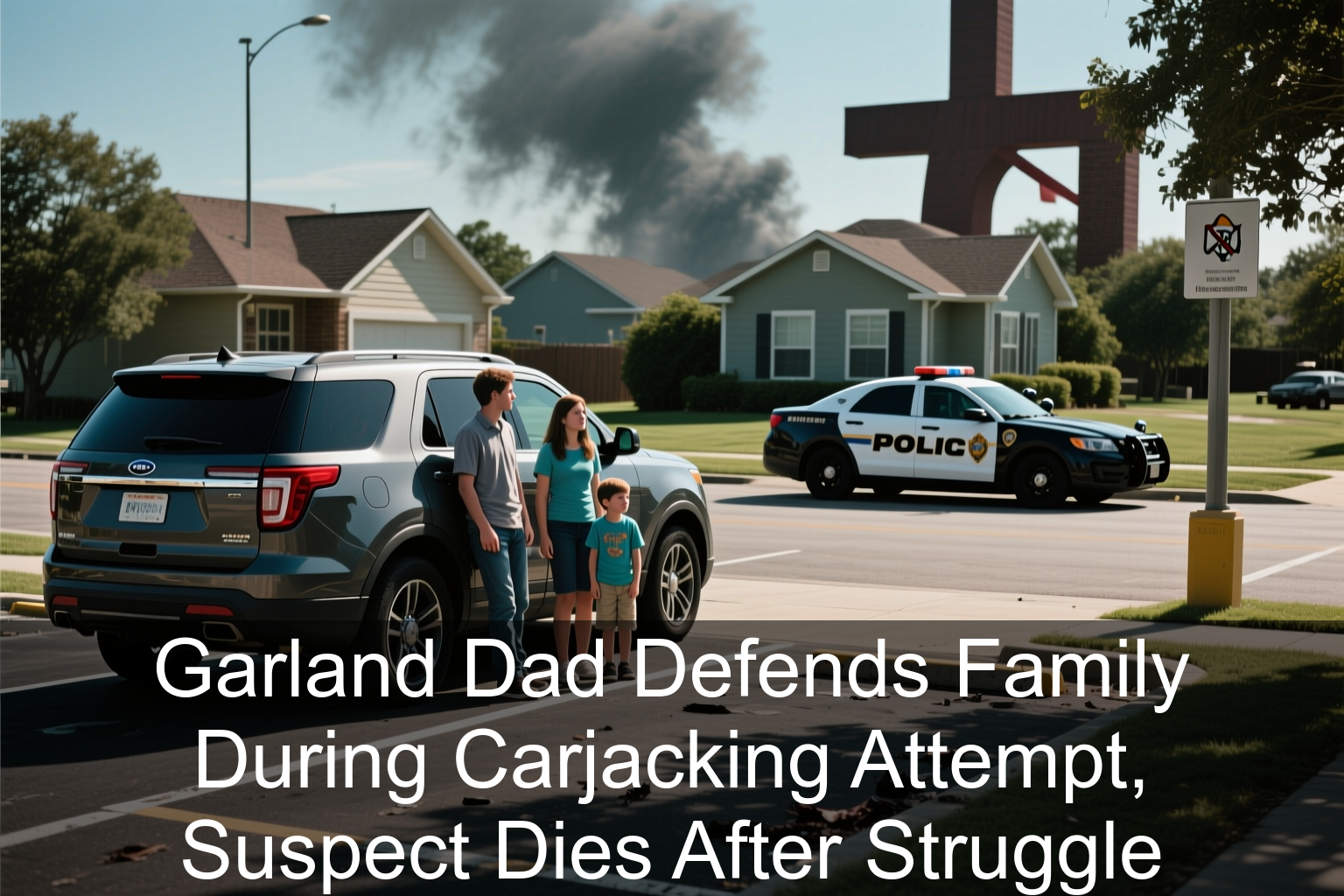
    Garland Dad Defends Family During Carjacking Attempt, Suspect Dies After Struggle

    Authorities in Garland, Texas, say a violent carjacking attempt ended with the suspect fatally shot after confronting a father who had multiple family members inside the vehicle. The incident happened on Sunday afternoon, May 3, 2026, and was captured on surveillance video reviewed by police.

    According to Garland Police Department officials, the suspect tried to take the vehicle while a family of eight was still in it. The father was inside with five children, along with two female passengers, when the attempted theft unfolded.

    Police describe the suspect as unarmed but aggressive, and they say the confrontation turned into an extended physical struggle. Investigators indicate the father fought back as the suspect attempted to gain control of the vehicle with the occupants still present.

    During the confrontation, the father shot the suspect, who later died from his injuries. Officials emphasize that the video evidence supports the conclusion that the father’s actions were taken to defend himself and protect the children and other passengers.

    Garland police have stated that no charges are expected against the father. From a libertarian perspective that recognizes the fundamental right of self-defense, the case underscores a basic reality: when government cannot be everywhere at once, responsible citizens sometimes must act immediately to protect their families from violent threats.

  • New York AG Letitia James Argues Civilian Body Armor Is Not Protected by the Second Amendment

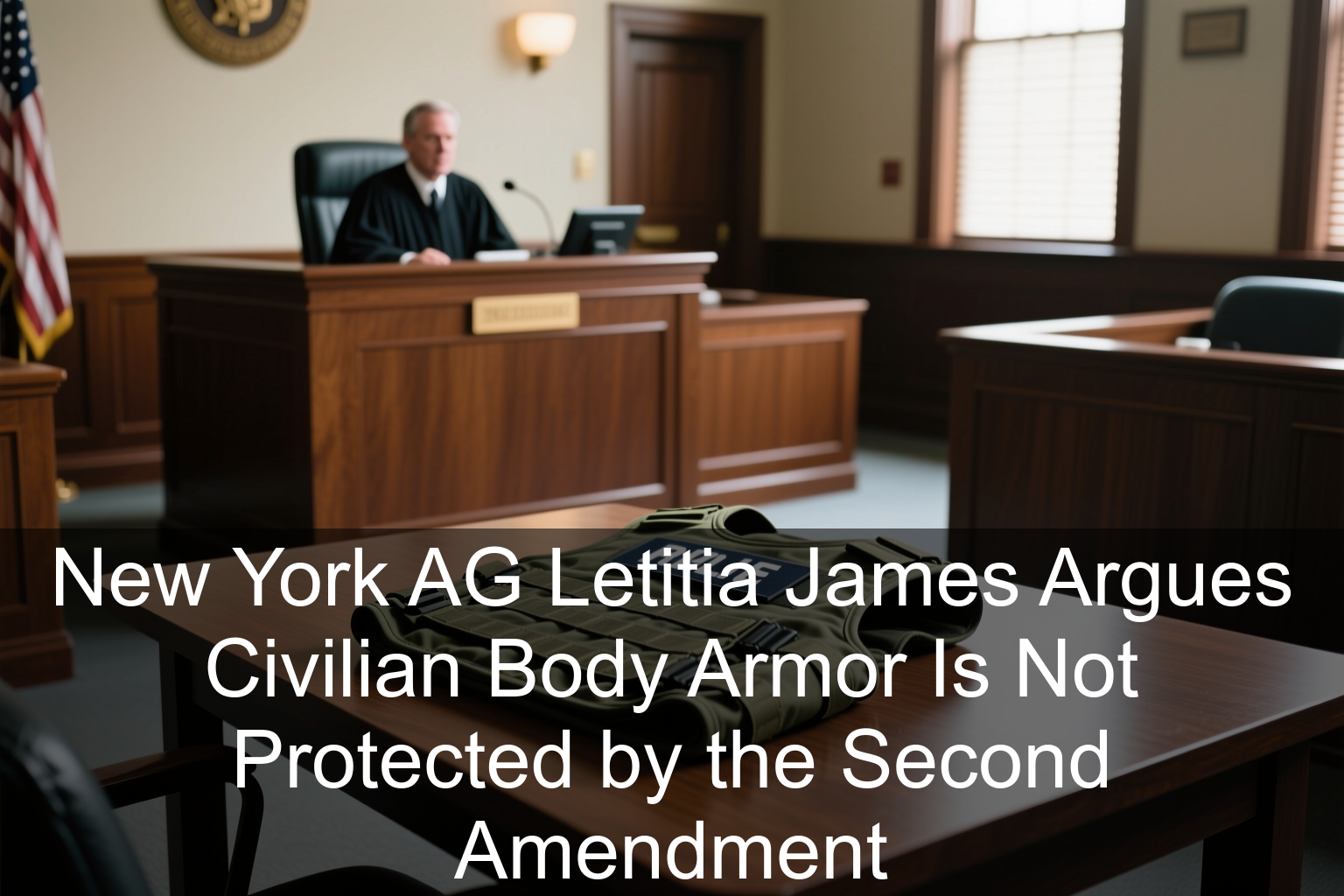
    New York AG Letitia James Argues Civilian Body Armor Is Not Protected by the Second Amendment

    New York Attorney General Letitia James is asking a court to throw out a lawsuit aimed at overturning the state’s prohibition on most civilian purchases of body armor. The request is part of an ongoing legal dispute over whether protective gear used for personal safety falls within constitutional protections connected to self-defense.

    At the center of the case is a challenge brought by the Firearms Policy Coalition, which is contesting New York’s restrictions and seeking to restore access for ordinary residents. The lawsuit directly targets the state’s ban on civilian body armor purchases and frames the issue as one that should be evaluated through the lens of modern self-defense needs.

    In pressing for dismissal, James is taking the position that body armor is not covered by the Second Amendment. That argument draws a line between firearms-related rights and protective equipment, asserting that the constitutional guarantee does not extend to the purchase of armor by civilians.

    Supporters of the challenge contend that the ability to defend oneself is not limited to offensive tools and that protecting one’s life is inseparable from the broader concept of self-defense. From a libertarian perspective, restricting peaceful citizens from acquiring defensive protection shifts power away from individuals and toward the state, even as everyday people remain responsible for their own safety in unpredictable situations.

    The legal battle highlights a broader national debate about how constitutional rights apply to contemporary safety concerns. With New York fighting to keep its ban in place and the Firearms Policy Coalition pushing back in court, the outcome could shape how far governments can go in limiting access to commonly sought protective gear in the name of regulation.

  • Benicia Police Investigate Fatal Shooting Said to Involve Juvenile Acting in Self-Defense

    Benicia Police Investigate Fatal Shooting Said to Involve Juvenile Acting in Self-Defense

    Benicia police are looking into a deadly shooting that unfolded late Thursday night, May 7, 2026. Early information provided in reports indicates the gunfire may have occurred as someone tried to defend against a domestic violence assault inside a family setting.

    Investigators say one man was shot once and was pronounced dead at the scene. Officials have not released additional medical details beyond confirming the fatal injury was a single gunshot wound.

    Authorities have also indicated the incident involved more than one family member. A juvenile was reportedly among those connected to what happened, a detail that has added complexity to how the case is being handled.

    As of the latest available update, police have not announced any arrests tied to the shooting. The lack of an immediate arrest suggests investigators are still sorting out the circumstances, including whether the use of force meets the legal standard for self-defense.

    The investigation remains ongoing, and police have not publicly identified the individuals involved. For now, the case is being treated as a serious domestic violence-related event in which a family member may have acted to stop an attack, underscoring the reality that immediate protection sometimes falls to the people already on the scene.

  • Harris County Content Creator Meetup Ends in Shooting After Alleged Robbery Attempt

    Harris County Content Creator Meetup Ends in Shooting After Alleged Robbery Attempt

    A late-morning meet-up between two social media content creators in northwest Harris County erupted into gunfire on Tuesday, April 28, 2026, according to investigators with the Harris County Sheriff’s Office.

    Authorities said the two had arranged to meet to talk about filming content. During the discussion, the encounter allegedly shifted from a planned collaboration into a confrontation inside a Tesla.

    Investigators reported that the passenger pulled out a firearm and attempted to rob the driver. The driver then shot the passenger in the chest, deputies said.

    The shooting was described by investigators as occurring during the attempted robbery, with the driver responding after the passenger allegedly produced a gun. The incident unfolded in northwest Harris County, and it happened late Tuesday morning.

    The case remains tied to an alleged armed robbery attempt during what began as an ordinary content-creation meeting, based on the sheriff’s office account. Deputies have described the sequence as the passenger initiating the threat and the driver firing a single shot that struck the passenger in the chest.

  • Jury Acquits Mansoor Ali in Cheyenne King Soopers Parking Lot Shooting Case

    Jury Acquits Mansoor Ali in Cheyenne King Soopers Parking Lot Shooting Case

    A Laramie County jury has returned not-guilty verdicts for Mansoor Ali, closing a closely watched case tied to a deadly encounter outside a King Soopers in Cheyenne. Ali, 22, had been on trial in connection with the shooting death of 19-year-old Benjamin Glenn.

    Jurors cleared Ali of second-degree murder, rejecting the prosecution’s claim that the shooting met the elements of that offense. In addition to the homicide charge, the panel also found Ali not guilty on four counts of aggravated assault and battery.

    The case centered on what occurred in the grocery store’s parking lot, where Glenn approached Ali while armed with a firearm. Ali’s defense team argued that the situation presented an immediate threat and that Ali’s decision to shoot was a lawful act of self-defense.

    The verdict followed a high-profile trial that drew significant attention because it involved competing narratives about danger, decision-making in tense moments, and the legal boundaries of defensive force. Ultimately, the jury accepted the self-defense argument offered by Ali’s attorneys.

    For many observers who prioritize individual rights and the principle that citizens should not be punished for protecting themselves when faced with an armed threat, the outcome reinforces the importance of due process and the right to self-defense. With the acquittal on all listed charges, Ali leaves the courtroom without criminal convictions from this incident.

  • Chicago Armed Citizen Stops Gun-Wielding Robbery Attempt

    Chicago Armed Citizen Stops Gun-Wielding Robbery Attempt

    Chicago saw another reminder that criminals do not always get to choose the outcome of their own crimes. In an incident highlighted by Bearing Arms, an armed resident confronted an alleged robber who was reportedly armed, turning what could have been a one-sided threat into a situation where the intended victim had options.

    According to the account, the suspect initiated an attempted robbery while armed. Instead of complying, the targeted individual was also armed and responded with defensive force, disrupting the robbery attempt and forcing the encounter in a different direction than the suspect likely expected.

    The episode underscores a point often lost in political debates about public safety: ordinary people sometimes face immediate danger without the luxury of waiting for a police response. In those moments, the ability to defend oneself can be the difference between becoming a victim and stopping a violent crime in progress.

    Supporters of the right to keep and bear arms argue that lawful carry is not about looking for conflict, but about being prepared for it when it arrives uninvited. Incidents like this are frequently cited as real-world examples that a would-be attacker cannot assume helplessness from the people they target.

    While broader arguments about gun policy tend to revolve around hypotheticals, this Chicago case centers on a concrete event: an armed robbery attempt met by an armed citizen who refused to be victimized. For many advocates of individual liberty and self-defense, it is further evidence that responsible, law-abiding firearm ownership can play a direct role in deterring crime and limiting harm when danger strikes.