
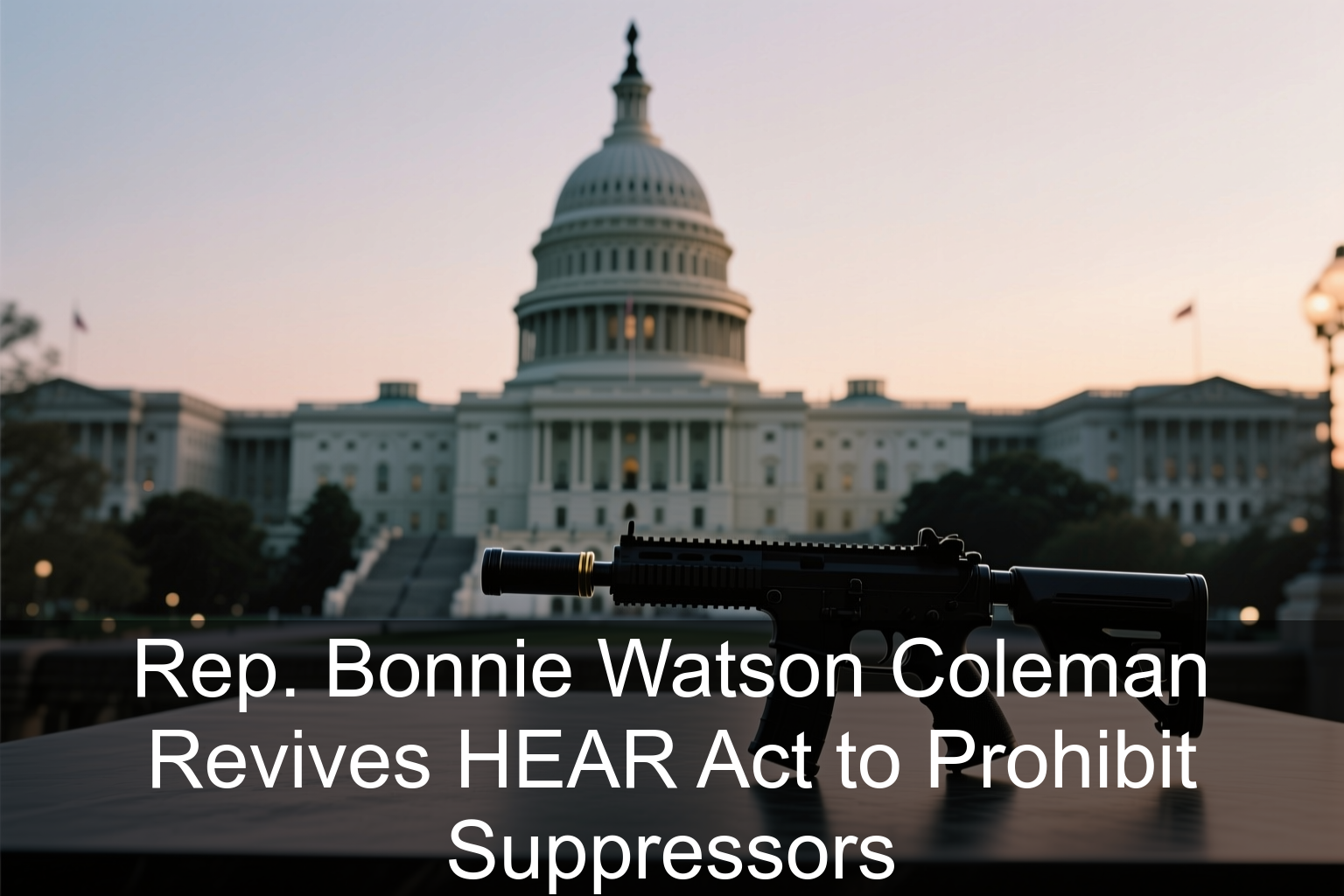

A new push in Congress is targeting firearm suppressors, reigniting a familiar dispute over what “common sense” should mean in federal gun policy. Critics of gun-control legislation argue that these efforts repeatedly focus more on regulating people than on addressing criminal misuse, and they say the latest proposal fits that pattern.
At the center of the renewed debate is U.S. Rep. Bonnie Watson Coleman, a Democrat from New Jersey. She has reintroduced federal legislation called the Help Empower Americans to Respond Act, commonly referred to as the HEAR Act. The proposal is framed by supporters as a public-safety measure, but opponents contend the bill’s branding is misleading and that its practical effect would be a broad ban on suppressors.
Suppressors are often a flashpoint because their name invites misconceptions. Those who favor fewer restrictions emphasize that suppressors are not “silencers” in the Hollywood sense and that their primary value is reducing noise exposure for shooters and people nearby. From a libertarian-leaning view, the underlying concern is that lawmakers are again placing new limits on a piece of safety-related equipment rather than focusing enforcement on those who commit crimes.
The reintroduction of the HEAR Act also highlights a recurring political strategy in Washington: reintroducing previously proposed gun-control measures and packaging them under appealing titles. Opponents argue that the “common sense” label is frequently used to sell policies that would criminalize ordinary ownership and lawful use, while doing little to deter individuals already willing to break existing laws.
As the legislation returns to the congressional agenda, gun-rights advocates are signaling firm resistance. They see the HEAR Act as another attempt to expand federal restrictions on lawful firearm accessories, and they argue that such proposals continue to shift decision-making away from individuals and toward centralized regulation.