
state politics

  • Virginia Surges to No. 2 in U.S. Rifle Purchases as Possible AR-15 Sales Ban Nears

    Virginia Surges to No. 2 in U.S. Rifle Purchases as Possible AR-15 Sales Ban Nears

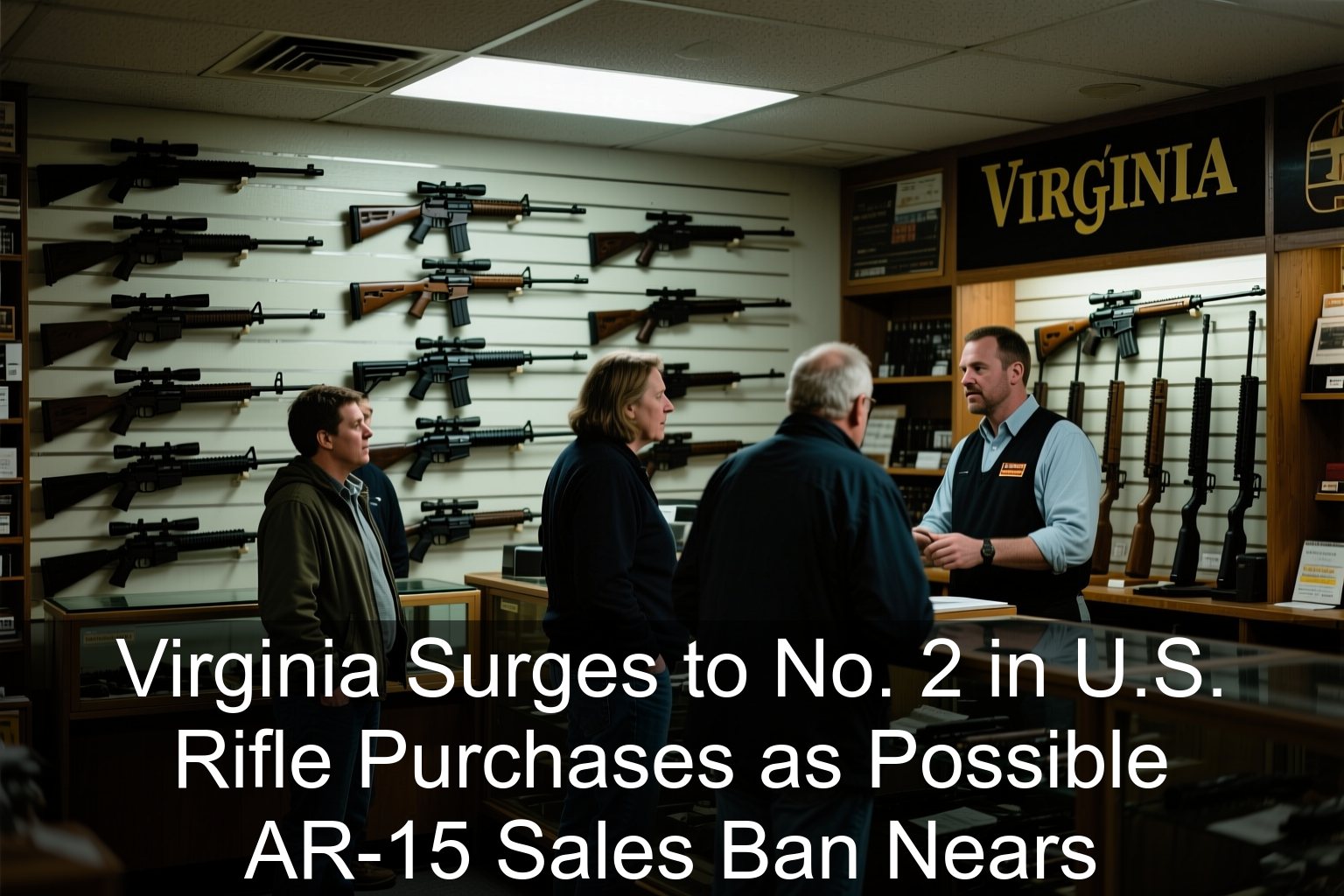
    Virginia has climbed to the second-highest spot nationally for rifle purchases as residents move quickly to buy firearms and standard-capacity magazines amid uncertainty over a potential state crackdown. The shift comes as lawmakers advance restrictions that could soon limit what can be sold, prompting many buyers to act before any new rules take effect.

    The immediate driver is pending legislation that would prohibit the sale of commonly owned semi-automatic rifles, including AR-15-style firearms, along with the ammunition magazines typically sold with them. Rather than waiting for the governor’s decision, Virginians have been heading to gun shops now, treating the current window as possibly their last chance to purchase the affected items through normal retail channels.

    This rush has reordered where Virginia sits compared with other states, pushing it near the top of the national rankings for rifle sales. The jump reflects a familiar pattern seen in other jurisdictions: when a ban is proposed or close to being signed, demand accelerates as citizens try to secure lawful products before the market changes.

    From a conservative and libertarian perspective, the situation underscores how regulatory threats can distort consumer behavior and burden ordinary people who want to exercise a fundamental right without being forced into a last-minute scramble. It also highlights the practical reality that bans often push otherwise routine purchases into a time-sensitive decision driven by politics rather than personal readiness or long-term planning.

    For now, the outcome hinges on whether the governor signs the measure. Until that decision is made, Virginia’s gun retailers and buyers are operating in a climate shaped by the possibility that sales of popular semi-automatic firearms and their standard magazines could soon be off-limits in the state.
  • Virginia Gun Control Bill Nears Final Form After Legislature Rejects Governor’s Key Change

    Virginia Gun Control Bill Nears Final Form After Legislature Rejects Governor’s Key Change

    Virginia’s gun-control package is now close to its endgame after lawmakers turned aside several of Gov. Abigail Spanberger’s most consequential requested edits, a decision that narrows what will change immediately and clarifies what still hinges on her next move.

    The turning point came Wednesday, when the Democratically controlled Senate and House of Delegates voted on multiple recommendations Spanberger sent back to them. Virginia’s process gives the governor unusual leverage at this late stage, allowing her to propose alterations after bills have already cleared the General Assembly. This week’s votes show that leverage has limits when the legislature isn’t willing to expand a bill beyond what it originally passed.

    The biggest practical effect of the rejection involves ammunition magazines. Spanberger had pushed for a tighter approach that would have functioned as a carry ban on magazines capable of holding more than 15 rounds. Lawmakers declined to adopt that change, meaning the final version won’t include that added restriction she sought.

    Legislators also refused another significant request tied to the new ban on guns in mental health hospitals. The governor wanted to remove an exception included by the legislature, but the House and Senate voted against stripping it out. As a result, the exception remains part of the bill that’s heading back to the executive branch.

    Even with the governor’s preferred expansions blocked, the overall scope of Virginia’s 2026 gun policy changes remains large. As of this week, 11 new gun-control bills have already completed the legislative process to the point that they’ve “made it across the finish line,” though two of the most far-reaching measures are still, at least technically, unresolved.

    Now, the measures lawmakers declined to amend return to Spanberger’s desk. From here, she has three options on each bill: sign it, veto it, or do nothing and allow it to become law without her signature. Those choices will determine not only which restrictions take effect, but also how quickly Virginia’s new rules solidify after a session that’s already produced the state’s biggest shift in gun policy in a long time.