
New York

  • Supreme Court Turns Away Two New York Second Amendment Petitions, Relists 25 Other Gun Case

    Supreme Court Turns Away Two New York Second Amendment Petitions, Relists 25 Other Gun Case

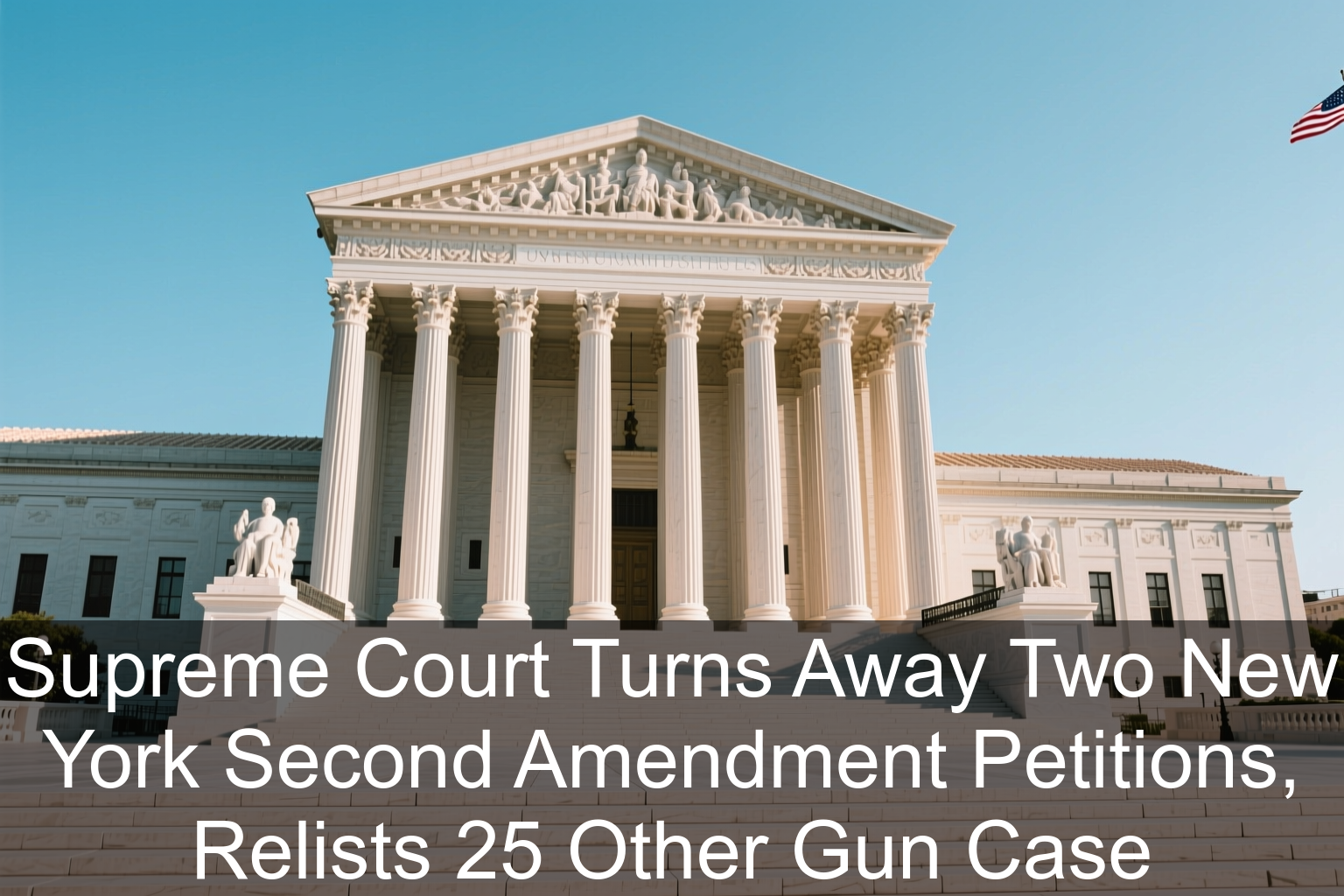
    The U.S. Supreme Court has chosen not to take up two separate Second Amendment disputes aimed at New York gun regulations. With those denials, the justices leave the challenged New York rules in place for now and decline to review the lower-court outcomes.

    At the same time, the Court is still weighing a broader group of firearms-related petitions. Rather than issuing final decisions across the board, the justices continue to consider numerous Second Amendment cases that have been presented for review.

    One clear sign of that continued consideration is the Court’s decision to relist another gun case for a future conference. In Supreme Court practice, a relist means the justices did not resolve the petition at their first opportunity and instead returned it to the agenda for additional internal review.

    According to the report, the Court relisted 25 other gun case. That move indicates the Court has not finished evaluating whether it wants to step in on at least some of the ongoing disputes involving firearm laws and the scope of the Second Amendment.

    From a constitutional and liberty-minded perspective, the mixed signals are notable: New York’s contested restrictions avoid immediate scrutiny from the nation’s highest court, while many other Second Amendment challenges remain in a holding pattern. For gun owners and civil-liberties advocates watching for clear guidance, the result is continued uncertainty as the Court decides which, if any, of these cases will ultimately be heard.
  • Second Circuit Rejects New York’s “Vampire Rule,” Restoring Default Carry on Private Property

    Second Circuit Rejects New York’s “Vampire Rule,” Restoring Default Carry on Private Property

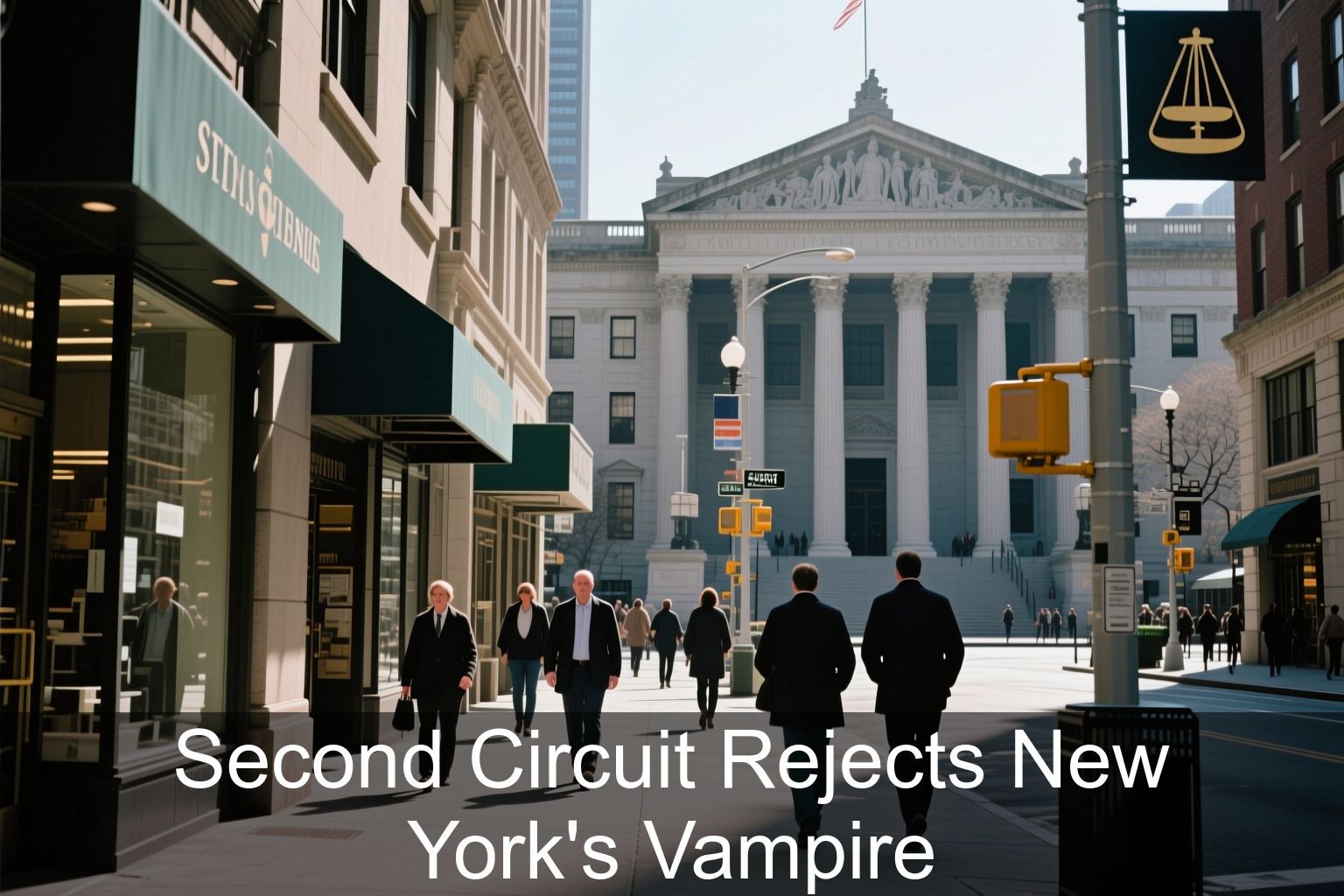
    A federal appeals court has ruled against a New York policy that treated most private property as off-limits to lawful firearm carry unless the owner gave specific, affirmative permission. The U.S. Court of Appeals for the Second Circuit struck down the provision often referred to as the state’s “Vampire Rule,” a nickname tied to how the law required property owners to “invite” carry rather than allowing it by default.

    Under the invalidated rule, a person could not carry a firearm onto private property unless the owner had expressly allowed it. In practical terms, that approach flipped the normal presumption on its head and forced businesses and property owners to proactively opt in, instead of letting them set restrictions only when they chose to do so.

    With the Second Circuit’s decision, the default framework returns to one that is more familiar in many states: lawful carry in businesses is permitted unless the property owner posts signage or otherwise communicates a prohibition. Property rights remain central under this approach—owners can still exclude firearms—but the burden is no longer on every owner to grant explicit permission before lawful carry is allowed.

    The ruling is being viewed as a significant win for gun-rights advocates because it blocks a broad, statewide ban that effectively covered large swaths of ordinary, everyday locations. At the same time, the court did not wipe away all location-based limits and left intact certain restrictions in places deemed “sensitive.”

    Among the limits the court kept in place are restrictions in public parks. As a result, while the decision narrows New York’s ability to impose a sweeping default ban on private property, it also confirms that the state can still enforce some carry prohibitions in specific categories of public locations.

  • Second Circuit Blocks New York’s Presumed Ban on Carrying Firearms on Private Property Open to the Public

    Second Circuit Blocks New York’s Presumed Ban on Carrying Firearms on Private Property Open to the Public

    A federal appeals court has rejected a key part of New York’s approach to restricting where licensed citizens may carry firearms. The U.S. Court of Appeals for the Second Circuit concluded the state cannot treat privately owned property that is open to the public as automatically off-limits to permit holders.

    At the center of the dispute was a New York rule critics dubbed the “vampire rule,” a reference to the idea that lawful carry rights effectively disappear unless a property owner gives explicit permission. Under that framework, a person with a valid carry license could be presumed barred from bringing a firearm onto any private property that is publicly accessible unless the owner affirmatively allowed it.

    The Second Circuit’s decision means New York may not impose a blanket presumption that licensed carry is forbidden across all such locations. Instead, the ruling recognizes that property owners remain free to set their own policies, but the state cannot preemptively convert every publicly accessible private space into a default prohibited zone for law-abiding licensees.

    The case highlights an ongoing tension between broad state-level restrictions and the day-to-day reality of ordinary places people pass through—shops, businesses, and other privately owned locations that invite the public in. From a liberty-minded perspective, the decision reinforces the principle that constitutional rights should not be treated as privileges that vanish in most real-world settings by default.

    While the ruling narrows New York’s ability to presume a ban, it does not remove a property owner’s authority to decide what is allowed on their premises. The key change is who makes the choice: the court’s decision prevents the state from making the default decision for every owner and every publicly accessible private property as a matter of law.

  • New York AG Letitia James Argues Civilian Body Armor Is Not Protected by the Second Amendment

    New York AG Letitia James Argues Civilian Body Armor Is Not Protected by the Second Amendment

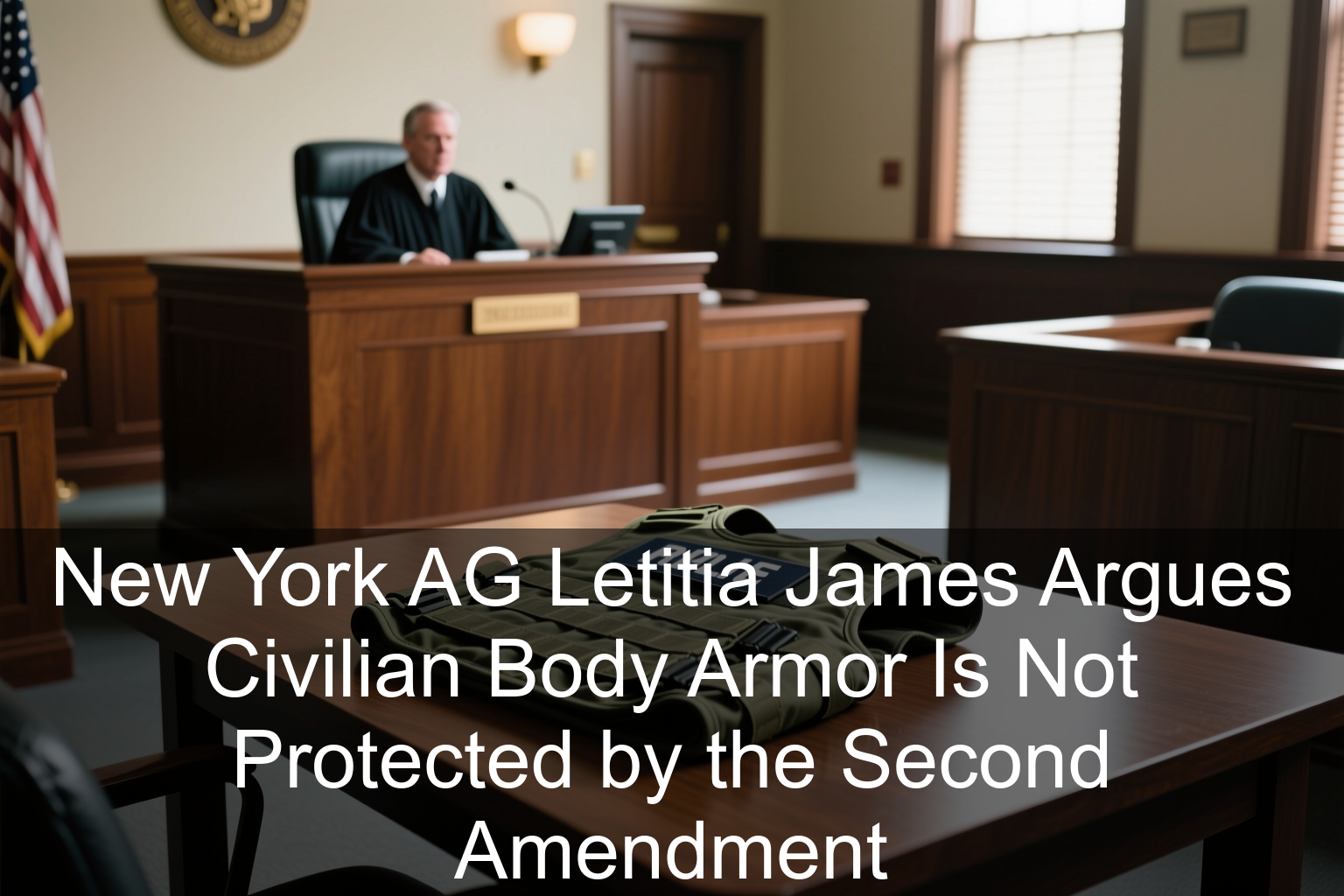
    New York Attorney General Letitia James is asking a court to throw out a lawsuit aimed at overturning the state’s prohibition on most civilian purchases of body armor. The request is part of an ongoing legal dispute over whether protective gear used for personal safety falls within constitutional protections connected to self-defense.

    At the center of the case is a challenge brought by the Firearms Policy Coalition, which is contesting New York’s restrictions and seeking to restore access for ordinary residents. The lawsuit directly targets the state’s ban on civilian body armor purchases and frames the issue as one that should be evaluated through the lens of modern self-defense needs.

    In pressing for dismissal, James is taking the position that body armor is not covered by the Second Amendment. That argument draws a line between firearms-related rights and protective equipment, asserting that the constitutional guarantee does not extend to the purchase of armor by civilians.

    Supporters of the challenge contend that the ability to defend oneself is not limited to offensive tools and that protecting one’s life is inseparable from the broader concept of self-defense. From a libertarian perspective, restricting peaceful citizens from acquiring defensive protection shifts power away from individuals and toward the state, even as everyday people remain responsible for their own safety in unpredictable situations.

    The legal battle highlights a broader national debate about how constitutional rights apply to contemporary safety concerns. With New York fighting to keep its ban in place and the Firearms Policy Coalition pushing back in court, the outcome could shape how far governments can go in limiting access to commonly sought protective gear in the name of regulation.