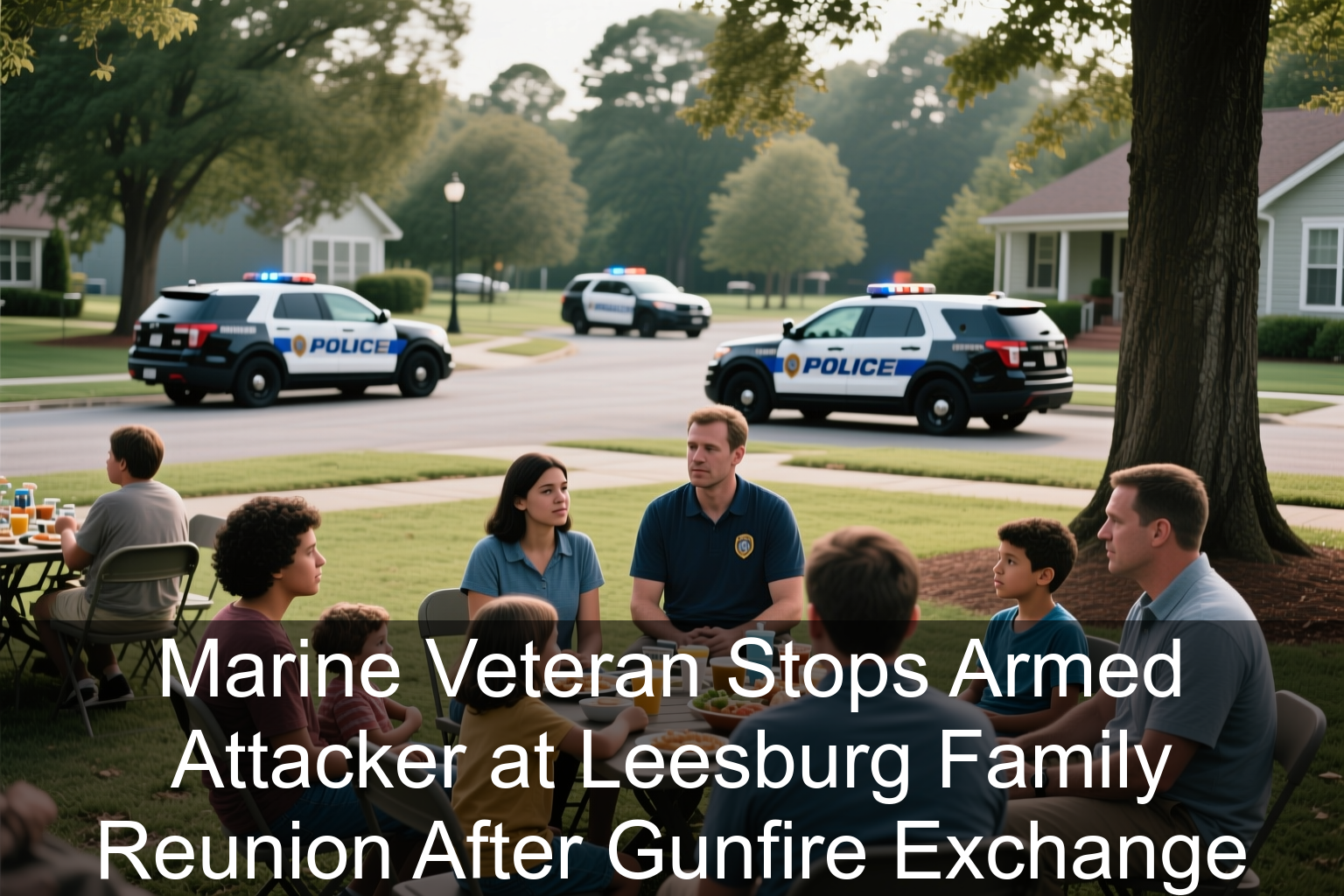
A family reunion in Leesburg, Georgia, was disrupted by a sudden outbreak of violence on Sunday, June 7, 2026, when an assailant opened fire on people gathered for the event. What began as a private, peaceful get-together quickly became an active-shooter situation.
Authorities described the assault as a racially motivated ambush carried out with a rifle. The attacker was later identified as Jeffrey Tyler Kinzer. Reports indicate he was wearing body armor while firing an AR-15 during the incident.
Among those at the reunion was Ramell Green, a U.S. Marine Corps veteran. As shots were fired, Green drew a defensive handgun and responded, exchanging fire with the rifleman rather than waiting helplessly for the attack to continue.
Despite the gunman’s body armor and rifle, Green’s return fire struck Kinzer and stopped his ability to continue the assault. Kinzer was hit, incapacitated, and the immediate threat to the gathering was brought under control.
The incident has renewed attention on the practical value of firearms training and lawful armed self-defense, especially when violence erupts without warning. In this case, a prepared citizen with military experience acted decisively at the moment it mattered, preventing a deadly situation from escalating further.