
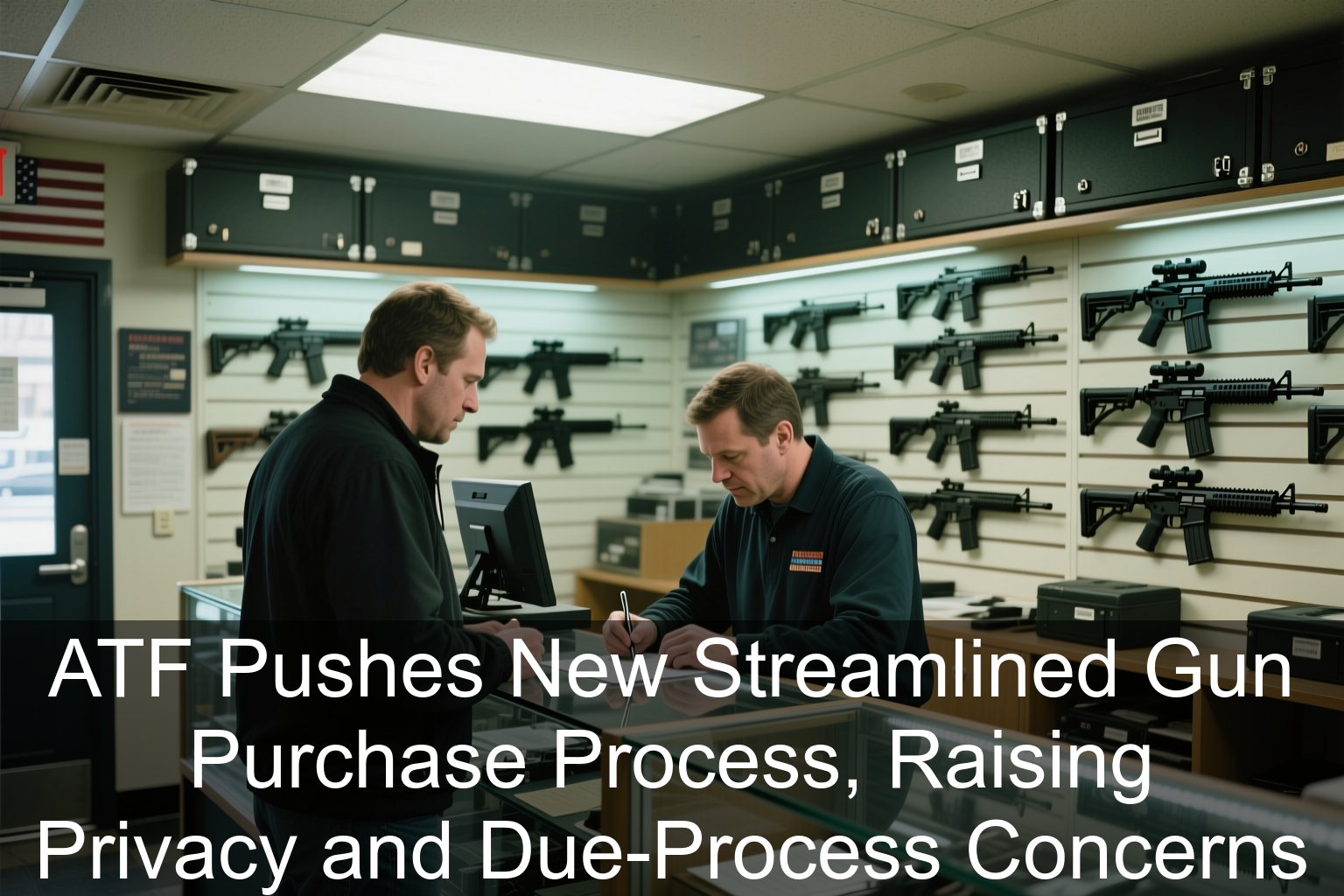

A federal effort now underway could reshape how many Americans complete a firearm purchase, with changes likely to be noticeable at the gun counter. The initiative centers on the Bureau of Alcohol, Tobacco, Firearms and Explosives (ATF) and its push to make the buying process faster and more uniform.
The ATF’s approach is being framed as a modernization and efficiency move—an attempt to reduce friction in the steps between selecting a firearm and finalizing a lawful transfer. Supporters of streamlining often argue that customers and dealers alike benefit when paperwork and delays are reduced.
From a conservative and libertarian perspective, however, “streamlining” from Washington frequently comes with tradeoffs that deserve close scrutiny. When federal agencies redesign systems that touch constitutional rights, the details matter: how information is collected, how long it is retained, who can access it, and what new compliance burdens are quietly placed on lawful gun owners and small businesses.
Another concern is that procedural changes can function like policy changes, even when Congress never votes on them. A shift in how purchases are processed can influence how easily people can exercise a fundamental right, and it can also expand the practical reach of federal oversight without transparent debate.
The article from The Reload describes the effort as one that could alter the purchasing experience for most Americans in significant, visible ways. As this develops, gun owners and Second Amendment advocates are likely to watch whether the promised efficiency is achieved without building new back-end infrastructure that can be repurposed later for broader monitoring or restrictions.
At minimum, any federal attempt to redesign the buying process should be judged by clear standards: protecting due process, preventing the creation of de facto registries, minimizing unnecessary data collection, and ensuring that lawful commerce is not choked by shifting administrative rules. If the ATF proceeds, the agency should be pressed to explain exactly what will change, why it is necessary, and how it will be constrained to avoid undermining the rights of ordinary Americans.