Congress

  • GOA Backs Rep. Lauren Boebert’s Proposal to Repeal the Machine Gun Tax

    GOA Backs Rep. Lauren Boebert’s Proposal to Repeal the Machine Gun Tax

    Gun Owners of America has announced its support for legislation introduced by Rep. Lauren Boebert that would remove the federal tax applied to automatic weapons. The organization’s endorsement centers on eliminating the existing tax burden that applies to these firearms under current federal law.

    Boebert’s measure targets the tax requirement tied to automatic weapons and would end that specific federal charge if enacted. The proposal has drawn attention within Second Amendment advocacy circles as a direct change to how the federal government treats these firearms.

    In its statement backing the bill, Gun Owners of America framed the issue as one of protecting constitutional rights and reducing federal barriers. From a limited-government perspective, the group’s position reflects a broader argument that lawful gun ownership should not be conditioned on special federal taxation.

    The endorsement also highlights how national gun-rights organizations are prioritizing legislative efforts that address not only bans and regulations, but also cost-based restrictions. Supporters typically view these taxes as a policy tool that can discourage ownership through financial pressure rather than through an outright prohibition.

    For now, the development is the introduction of the bill and GOA’s public support for it, setting the stage for continued debate in Congress over whether the tax on automatic weapons should remain in place or be repealed.

  • Kentucky Voters: Back Thomas Massie in Tomorrow’s Election

    Kentucky Voters: Back Thomas Massie in Tomorrow’s Election

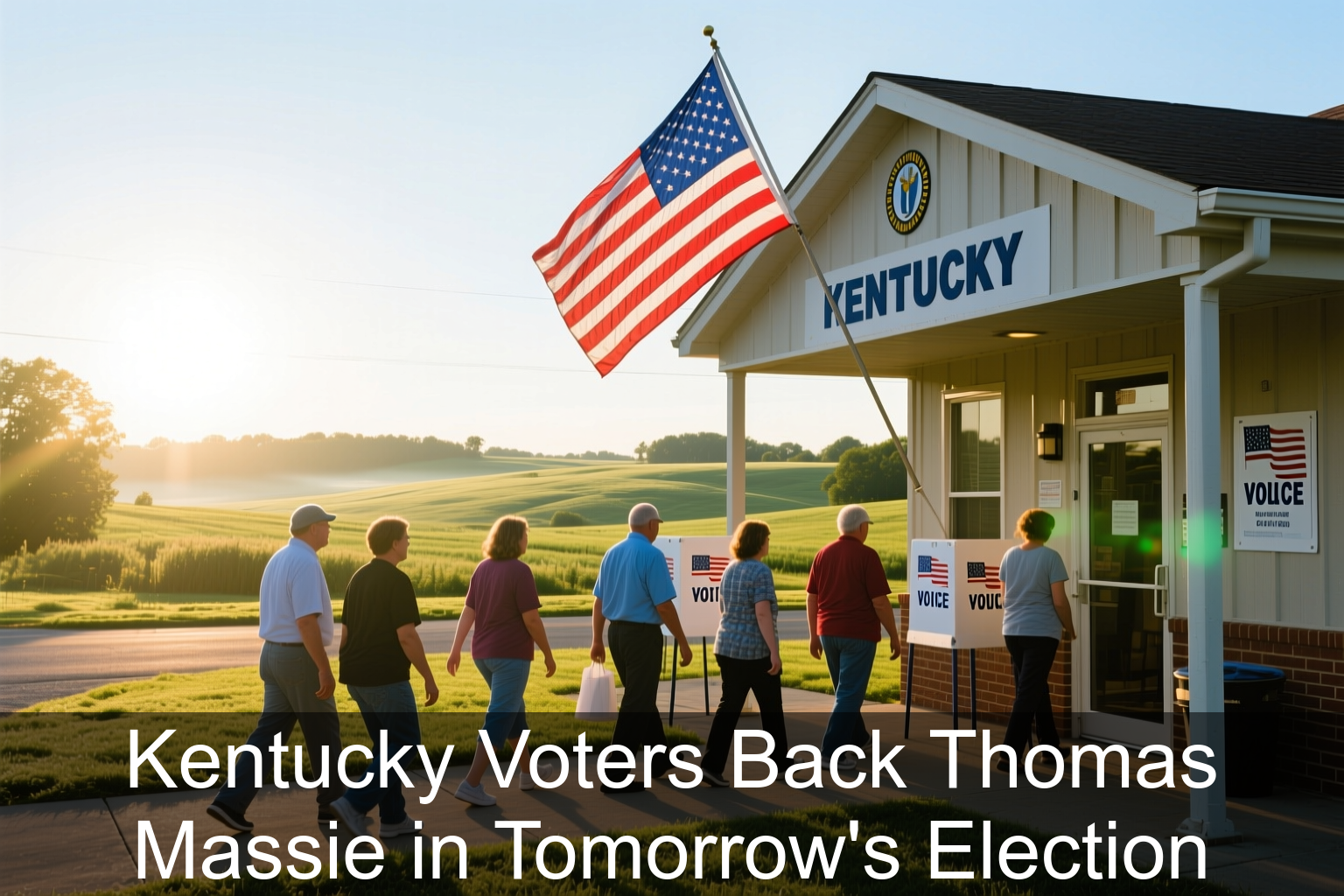
    Kentucky voters head to the polls tomorrow with a clear choice about the direction of the state’s representation in Washington. For those who prioritize limited government and constitutional principles, the election is an opportunity to support a candidate aligned with those values.

    U.S. Rep. Thomas Massie is on the ballot in Kentucky, and his supporters are urging voters to turn out and cast their vote for him. The message is straightforward: show up tomorrow and make your preference count.

    The call to action is aimed squarely at Kentuckians who want an elected official known for resisting federal overreach and backing individual liberties. In that view, elections are one of the most direct ways for citizens to push back against policies that expand government power.

    Because turnout can decide outcomes, supporters emphasize voting promptly and making sure friends and family participate as well. The focus is on practical civic engagement—getting to the polls and ensuring the result reflects the voters who care enough to act.

    With the vote happening tomorrow in Kentucky, the immediate task for Massie’s backers is simple: participate in the election and support Thomas Massie at the ballot box.

  • Fix Our Forests Act Moves Forward in Congress to Tackle Wildfire Risk and Restore Habitat

    Fix Our Forests Act Moves Forward in Congress to Tackle Wildfire Risk and Restore Habitat

    A major federal effort to address worsening conditions in America’s forests is gaining momentum on Capitol Hill, as lawmakers advance bipartisan legislation aimed at improving forest health. Supporters say the problem has been building for years and has been repeatedly highlighted by people who live and work closest to the land, including hunters, conservation advocates, rural residents, and forest managers.

    Earlier this session, the U.S. House of Representatives approved H.R. 471, known as the Fix Our Forests Act. The measure is a stated priority of the National Shooting Sports Foundation (NSSF), which has been urging action to confront what it describes as a forest health crisis affecting habitat and increasing wildfire danger.

    The bill is sponsored by Rep. Bruce Westerman of Arkansas, the chairman of the House Natural Resources Committee. Backers emphasize that Westerman’s role as committee chair places him at the center of congressional work on public lands and forest policy, and they argue that his leadership reflects an on-the-ground understanding of the challenges that have been accumulating across many forested regions.

    Proponents frame the legislation as a practical response focused on restoring habitat while also lowering the likelihood and severity of catastrophic wildfires. The argument behind the push is that delaying action has real consequences for communities near forested areas and for those who rely on healthy habitat for wildlife and outdoor recreation.

    From a limited-government perspective, supporters also point to the value of timely, targeted management decisions that reduce risks before disasters occur, rather than relying on costly emergency responses after fires break out. With House passage completed, advocates are pressing for continued progress as Congress considers next steps for the Fix Our Forests Act.

  • Concerns About Government Surveillance of Gun Owners

    Concerns About Government Surveillance of Gun Owners

    Federal surveillance of Americans doesn’t always look like agents serving warrants or conducting raids. In practice, a large part of modern monitoring can happen quietly—by buying information that private companies already collected. That’s the concern driving a growing debate right now: whether federal agencies are using commercial data purchases, plus Foreign Intelligence Surveillance Act (FISA) authorities, to map and categorize lawful gun owners without going to court.

    Here’s what’s happening in the current landscape. Federal law enforcement and intelligence agencies are purchasing access to enormous commercial datasets. These data troves can include location histories, web browsing activity, and inferred interests or hobbies—essentially whatever a data broker is willing to package and sell. The core issue isn’t that this information exists; it’s that government entities can obtain it with a credit card instead of a warrant.

    Under today’s interpretation of privacy rules, agencies argue they don’t need a court order to acquire information that was already gathered by private companies. Critics respond that this creates an end-run around the Fourth Amendment: if the government can’t lawfully seize certain personal information without probable cause and judicial oversight, it shouldn’t be allowed to buy the same information and call it “legal.” In other words, the method changes, but the effect—warrantless access to sensitive personal data—remains.

    For gun owners, the anxiety is amplified by how these datasets can be used. When location data, browsing behavior, and consumer profiles are combined, they can help build detailed dossiers on individuals and communities. And the targeting concern isn’t merely theoretical. The Biden administration formally classified gun owners as “Militia Violent Extremists,” which adds fuel to fears that lawful Second Amendment activity could be treated as a signal for heightened scrutiny.

    Then there’s FISA Section 702. This authority was promoted to the public as a way to monitor foreign threats. But Section 702 also creates a pathway for Americans’ communications and data to be collected when they are in contact with a foreign surveillance target—without requiring a warrant for the American whose information is incidentally swept in. People worried about gun-owner profiling argue that when Section 702 collection is paired with commercially purchased data, it becomes far easier to identify, sort, and track Americans who haven’t been charged with any wrongdoing.

    Technology is what makes all of this feel different—and more immediate—than older surveillance debates. AI-driven analysis can rapidly cross-reference millions of records, making it possible to assemble large-scale profiles in seconds. The fear expressed by critics is that this combination of mass data access and automated processing can function like an informal, AI-assisted gun registry—even if there’s no single database labeled that way and even if it doesn’t rely on individual firearm transaction records. The infrastructure is what matters: commercial data pipelines, analytics platforms, and government access mechanisms that can be repurposed by any future administration, including one hostile to gun rights.

    That’s why the legislative fight is active right now. Two bills are central to the immediate policy push:
    – Rep. Warren Davidson’s Fourth Amendment Is Not for Sale Act, which is intended to shut down the loophole that allows government agencies to purchase sensitive personal data without meeting constitutional warrant standards.
    – Sen. Mike Lee’s Security and Freedom Enhancement (SAFE) Act, aimed at curbing abuses tied to surveillance authorities and reinforcing protections that require warrants.

    Supporters of these measures argue the principle should be simple: if an agency would need a warrant to compel the data, it shouldn’t be able to bypass the courts by buying it. No warrant, no purchase, no special carve-outs.

    For gun owners watching this unfold, the practical takeaway is that the question isn’t whether surveillance tools exist—they do, and they’re already widely deployed. The live question is whether Congress will change the rules now, while the systems are in place, to prevent warrantless profiling of law-abiding Americans who choose to exercise a constitutional right.