

Colorado gun laws

  • Tenth Circuit Strikes Down Federal Rule on “Ghost Gun” Kits

    Tenth Circuit Strikes Down Federal Rule on “Ghost Gun” Kits

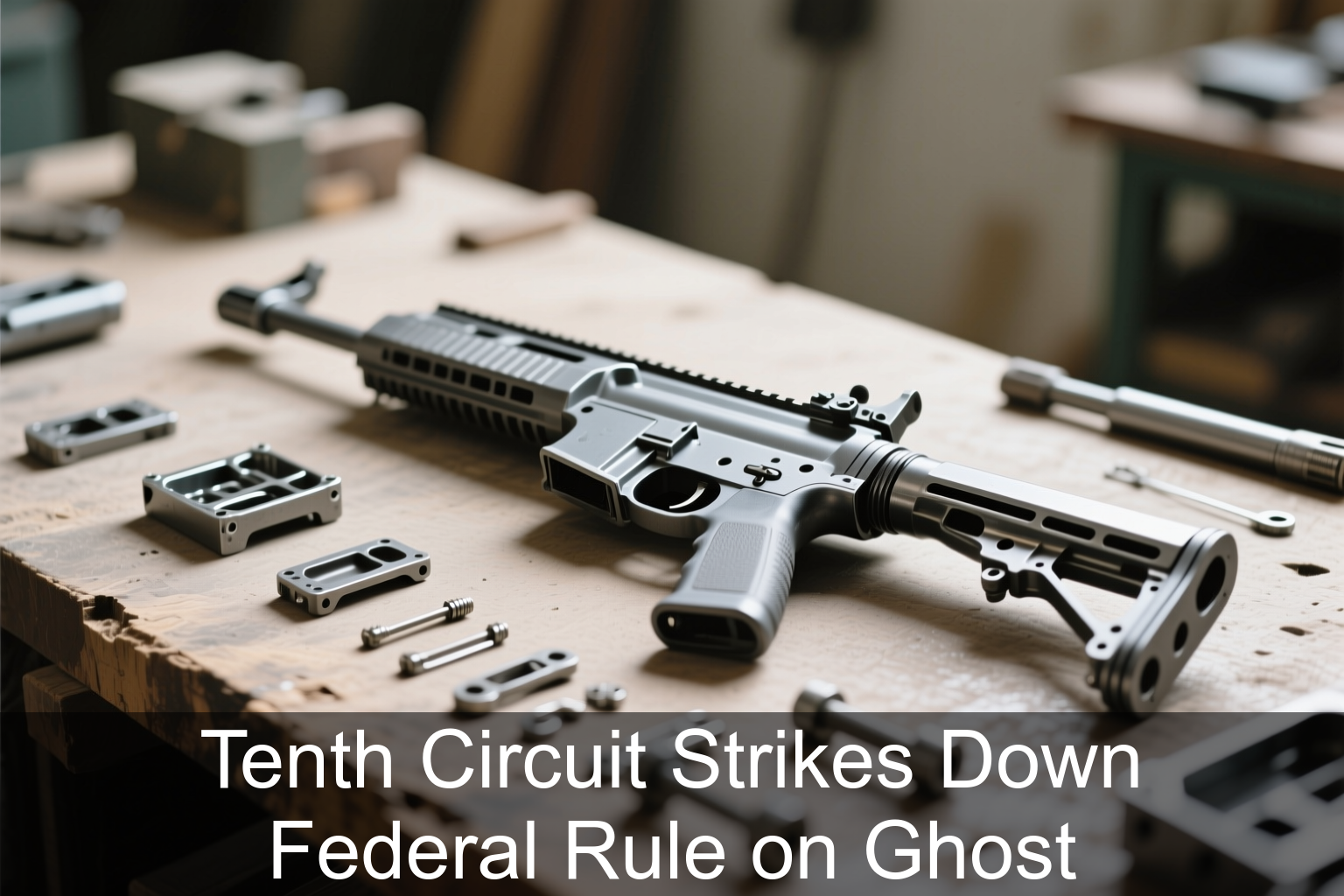
    A major shift just landed for anyone dealing in “ghost gun” kits and unserialized frames or receivers across the Tenth Circuit. A three-judge panel of the U.S. Court of Appeals for the Tenth Circuit has struck down the federal ATF rule that attempted to regulate unfinished frames and receivers—often sold as parts kits—by treating many of them as firearms.

    That ruling changes what the Bureau of Alcohol, Tobacco, Firearms and Explosives can enforce right now within the Tenth Circuit, even as the larger nationwide fight continues in other courts. For kit sellers, buyers, and compliance teams, the immediate question isn’t philosophical—it’s practical: what rules apply today, what has paused, and what still exposes you to risk.

    What the decision does inside the Tenth Circuit
    With the ATF’s unfinished frames and receivers rule knocked out in this region, the agency’s ability to rely on that rule as the basis for enforcement against qualifying kits is immediately constrained in Tenth Circuit states. That means the federal regulatory hook that many businesses adjusted to—treating certain kits like completed firearms for purposes such as serialization and licensed-dealer processing—no longer has the same force here.

    If you sell kits: your compliance playbook may diverge by geography
    For businesses that ship or sell firearm parts kits, this decision creates a real split in day-to-day compliance. Inside the Tenth Circuit, the ATF rule is no longer the controlling standard. Outside the Tenth Circuit, sellers still have to assume the federal rule may be enforced depending on the jurisdiction and the posture of ongoing litigation.

    In practice, many sellers are now facing a choice:
    1) Keep a single nationwide compliance standard (more conservative, easier operationally).
    2) Run a Tenth Circuit-specific approach (potentially less burdensome here, but operationally complex and legally sensitive).
    3) Pause certain product offerings or shipping destinations until the legal landscape stabilizes.

    Even for sellers who want to loosen restrictions in Tenth Circuit states, the business risk doesn’t disappear. State laws and other federal statutes still matter, and this ruling does not guarantee that future appeals or other courts won’t bring different outcomes.

    If you buy kits: federal treatment shifts here, but your state law still controls
    For buyers in the Tenth Circuit, the biggest immediate impact is that the ATF can’t lean on the vacated federal rule to treat covered unfinished frames/receivers or parts kits as regulated firearms under that rule’s framework. But that doesn’t mean “anything goes.”

    State and local restrictions can still prohibit certain conduct, and they can be broader than federal requirements. Colorado, for example, has its own restrictions aimed at unserialized frames, receivers, and firearms. Those state limits remain a separate legal layer, and the Tenth Circuit’s action on the federal rule doesn’t automatically cancel state bans.

    ATF enforcement posture: narrower in the Tenth Circuit, but not frozen everywhere
    The ruling restricts ATF’s ability to enforce the invalidated federal rule in the Tenth Circuit, but it doesn’t eliminate ATF authority generally. The agency can still pursue cases under other federal laws where applicable. The practical change is that the specific regulatory theory created by the unfinished frames and receivers rule is no longer available as a basis for enforcement here.

    Meanwhile, ATF can still take a different posture in jurisdictions outside the Tenth Circuit, where the rule may remain in effect depending on ongoing litigation.

    Why this matters beyond the federal rule: courts are scrutinizing “end-run” reasoning
    This moment also arrives as courts continue to wrestle with how far governments can go in regulating possession, acquisition, and manufacture while claiming the Second Amendment isn’t implicated. In a separate Tenth Circuit case involving Colorado’s ban on unserialized firearms, frames, and receivers, the court rejected the idea that a possession ban can be treated as merely a condition on commercial sales. The panel emphasized that a prohibition on possessing an unserialized frame or firearm regulates possession regardless of how it was obtained.

    That analysis signals something important for compliance planning: courts in this circuit are paying close attention to how laws are characterized, especially when governments argue that regulations affecting firearms fall outside the Second Amendment’s coverage.

    Where things go next: regional reality now, national uncertainty later
    This decision doesn’t end the broader dispute over how unfinished frames, receivers, and firearm parts kits should be treated under federal law. It does, however, create an immediate and concrete enforcement boundary within the Tenth Circuit.

    For sellers, the operational question becomes whether to standardize compliance nationally or tailor it to a patchwork legal map. For buyers, the key takeaway is that federal regulatory treatment has shifted here—but state bans and other restrictions may still apply. For the ATF, this ruling narrows one pathway for enforcement in this circuit while leaving the agency to rely on other tools and to continue litigating in other regions.

    Until the wider litigation resolves, the most realistic posture in the Tenth Circuit is cautious flexibility: understand what the ruling changes today, document your compliance decisions, and be prepared to adjust quickly if a higher court or another proceeding reshapes the rules again.
  • Analysis of the Debate Over “Ghost Gun” Bans

    Analysis of the Debate Over “Ghost Gun” Bans

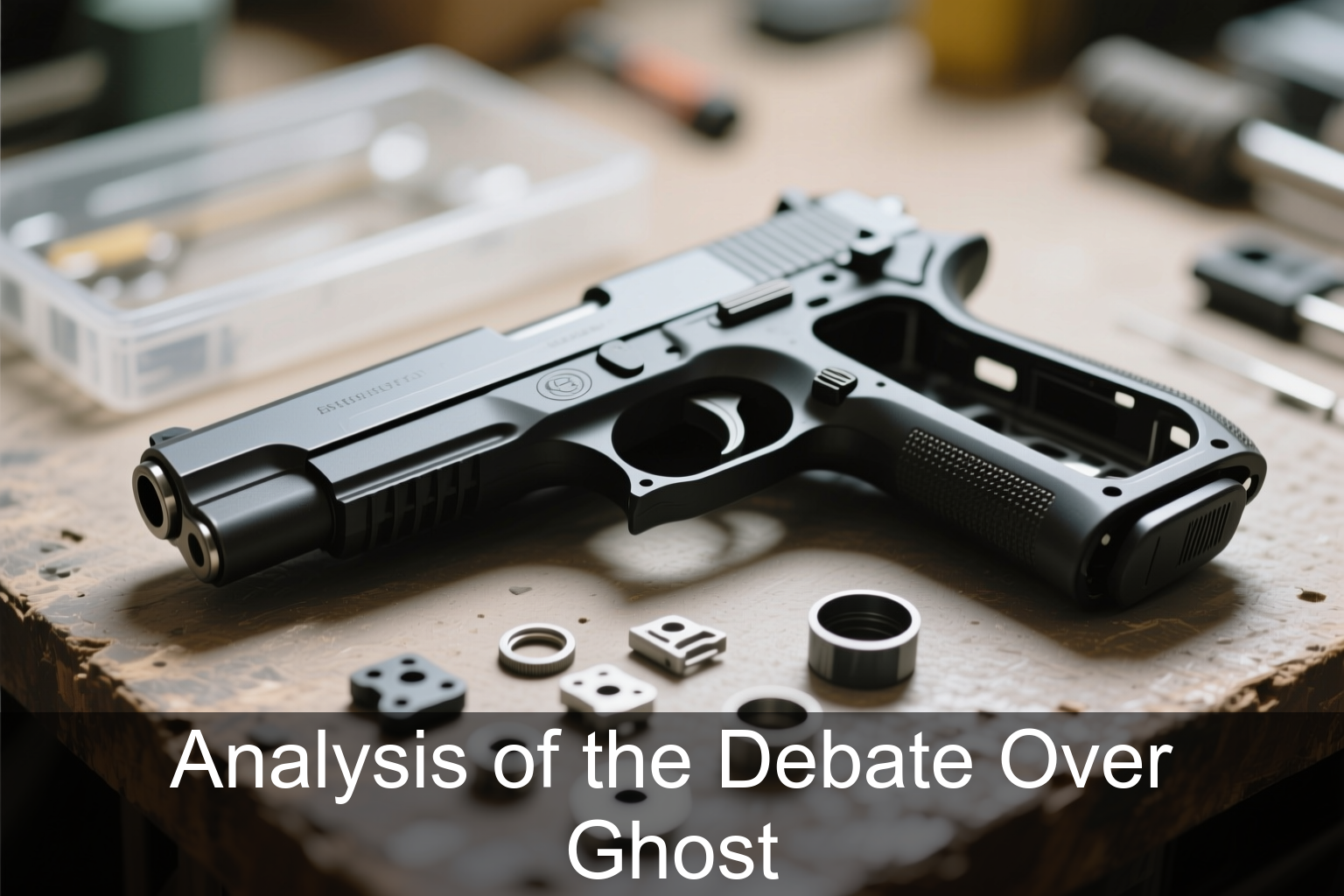
    The legal fight over state “ghost gun” bans is moving again, and a fresh decision out of the Tenth Circuit is already changing the playbook for how these laws get defended after New York State Rifle & Pistol Association v. Bruen.

    This week, a three-judge panel of the U.S. Court of Appeals for the Tenth Circuit issued a split decision in NAGR v. Polis, a case challenging Colorado’s restrictions on firearms, frames, and receivers that lack serial numbers. The plaintiffs, led by the National Association for Gun Rights, were appealing a district court ruling from May 2024 that refused to temporarily block Colorado’s law while the lawsuit proceeds.

    Colorado still gets to keep its statute in force for now. But the panel did something that matters well beyond this one dispute: it rejected a common argument lower courts have been using to avoid Bruen’s history-and-tradition test—especially when a law touches the act of possessing a firearm.

    The district court had treated Colorado’s possession prohibition as if it were basically a sales rule, reasoning that it operated like a “condition or qualification on the commercial sale of firearms.” Under that framing, the judge concluded the possession restriction didn’t even fall within the Second Amendment’s text, sidestepping Bruen’s requirement to justify gun regulations through historical analogues.

    The Tenth Circuit refused to go along. Writing for the majority, Judge Joel Carson said the possession ban regulates possession of an unserialized firearm or frame regardless of how it was acquired. The panel’s point was straightforward: calling a possession ban a “commercial regulation” doesn’t make it one, and the Second Amendment’s protection of keeping arms can’t be analyzed away by re-labeling the restriction as something about prior transactions.

    That holding directly undercuts the “commercial regulation” workaround that has become increasingly popular in post-Bruen litigation. Courts have leaned on it most often to sustain rules like waiting periods and some background-check-related requirements by describing them as regulating acquisition rather than the “keeping” and “bearing” of arms. Whatever the ultimate fate of those other laws, the Tenth Circuit’s message here is clear: once a statute criminalizes or prohibits possession itself, the analysis can’t be dodged by pretending it’s only about commerce.

    The panel also revived key parts of the challenge to Colorado’s purchasing restrictions for unserialized parts and kits. The district court had dismissed that portion as premature, saying the plaintiffs weren’t facing a distinct harm because federal rules—specifically the ATF’s “unfinished frames and receivers” final rule—covered the same conduct anyway. In other words, the lower court treated federal regulation as making Colorado’s ban irrelevant for purposes of the lawsuit.

    The Tenth Circuit disagreed. Judge Carson explained that the ATF’s rule does block some transactions involving unserialized parts kits, but it doesn’t sweep as broadly as Colorado’s statute. One major difference the panel highlighted is that the ATF rule does not apply to private individuals in the way Colorado’s law does. So if the plaintiffs want to buy from private sellers, Colorado’s statute creates an additional, separate legal injury that a court ruling could actually remedy.

    Because of that, the appeals court sent the case back to the district court with instructions to take another look at the request to block enforcement—this time with the correct understanding of both the possession ban and the acquisition ban.

    That remand was the extent of the immediate wins for the challengers. On the manufacturing side of Colorado’s law, the panel adopted a narrow interpretation of what counts as “manufacturing” under the statute—an interpretation that effectively removed the plaintiffs’ intended conduct from the scope of the provision they were attacking.

    The plaintiffs said they planned to build privately made firearms from parts kits by turning unfinished frames or receivers into finished ones. The court framed the core question as whether finishing an unfinished frame or receiver is “manufacturing” under Colorado law. The state compared the process to assembling a model airplane from a kit, arguing that ordinary usage wouldn’t label assembly as manufacturing.

    The panel found support for the state’s interpretation in how the statute described related concepts. Judge Carson pointed to the law’s definition of a 3D printer as a “manufacturing device” that produces an object through an additive process. By contrast, the statute described the process at issue—taking an unfinished frame to a finished one—as “completing,” “assembling,” or “converting,” rather than “producing” it through a manufacturing process.

    Based on that textual context, the Tenth Circuit concluded the manufacturing ban targets making frames or receivers from raw materials, not finishing or assembling an already-manufactured unfinished frame into a completed one. With that reading in place, the panel dismissed the plaintiffs’ manufacturing-ban challenge because, as interpreted, the law didn’t prohibit what they said they wanted to do.

    So where does that leave the broader debate over ghost gun bans?

    Right now, Colorado’s entire framework remains on the books while the district court re-evaluates the surviving claims. It’s also impossible to predict how the lower court will apply the full Second Amendment framework once it returns to the merits.

    But the direction from the Tenth Circuit reshapes how these disputes are likely to be argued, especially under Bruen. The panel’s opinion signals that a possession restriction—particularly one that applies no matter how an item was obtained—must be treated as a direct burden on the right to keep arms, not smuggled into a “commercial sales regulation” category to avoid constitutional scrutiny. And by rejecting the idea that the ATF’s separate regulatory regime makes state acquisition bans unchallengeable, the ruling keeps state laws from being insulated simply because federal rules touch some of the same territory.

    In practical terms, the court didn’t strike down Colorado’s ghost gun law. What it did do is remove a convenient escape hatch. For states defending ghost gun bans that reach possession, the Tenth Circuit has made the path narrower: if the law regulates possession, courts in this circuit will have to confront the Second Amendment question head-on, with Bruen’s historical-analogue analysis in view rather than parked off to the side.