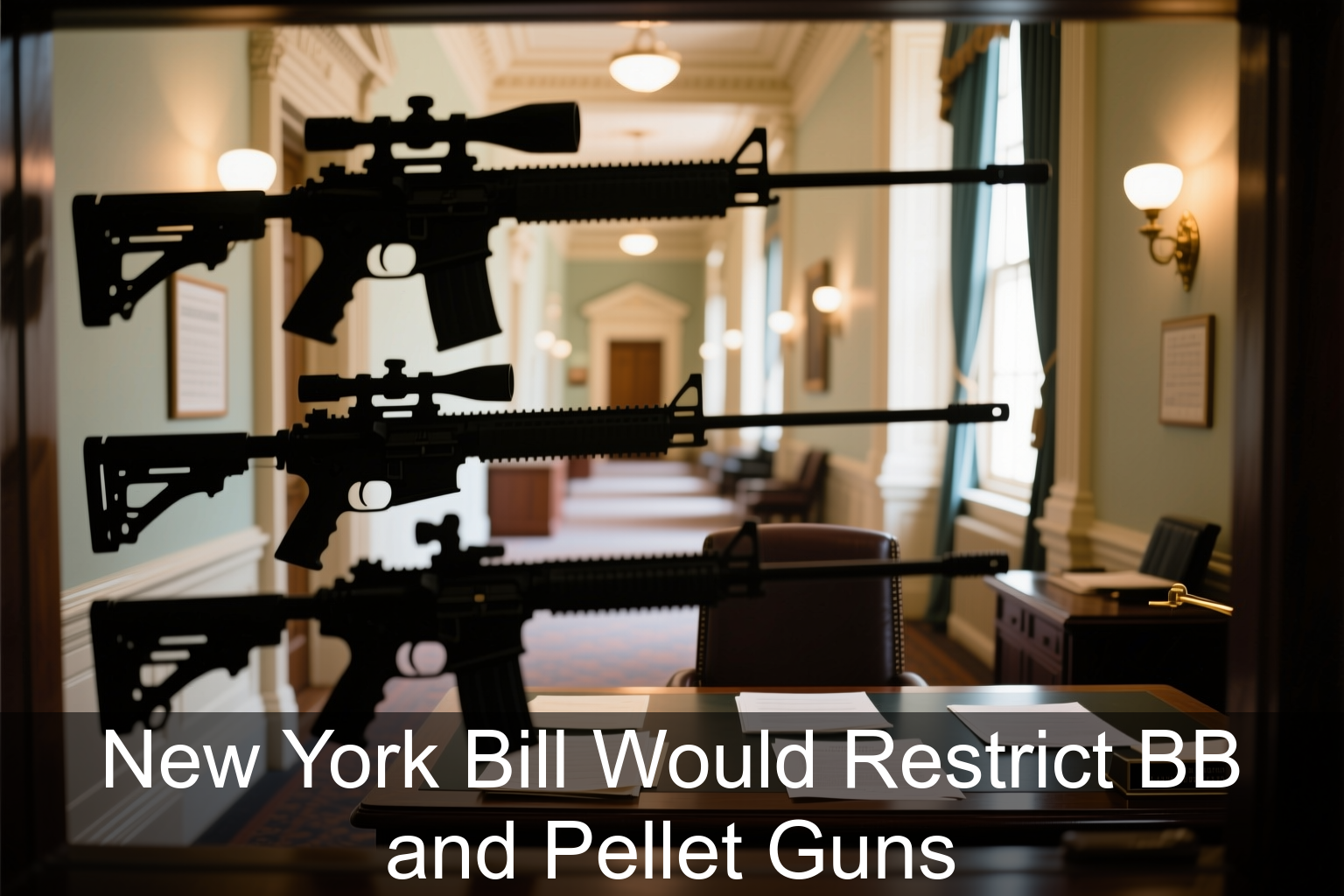

Albany is weighing a pair of bills that would change how BB guns, pellet guns, and air rifles are treated under New York law—and the next steps in the Capitol will determine whether these common recreational items become regulated like non-firing replicas.
Right now, the proposal is moving through the State Legislature under two companion measures: A10701 in the Assembly and S9215 in the Senate. Both bills target a single, high-impact change: expanding the state’s definition of an “imitation weapon” so it would also cover functional air guns, including BB guns, pellet guns, and air rifles.
That definitional shift matters because New York’s current rules for “imitation weapons” weren’t built for devices that actually fire a projectile. Under existing law, an imitation weapon is something designed to resemble a real firearm but that is not a firearm. To be sold legally, products in that category must meet five requirements: they must be made from transparent or brightly colored material, they must display the manufacturer’s name, they cannot include a laser pointer, and—most crucially—the barrel has to be sealed with a plug at least one-half inch deep.
If BB and pellet guns are reclassified into that category, retailers would be pushed into an immediate compliance problem. A functional air gun depends on an open barrel to operate; a mandated plug would block it. In practical terms, stores could only sell versions that have been rendered incapable of firing—turning what is typically purchased for target practice, basic shooting-safety familiarity, and pest control into an inert look-alike.
For current owners, the bills are aimed at sales and classification rather than announcing a direct confiscation in the details available here, but the ripple effects could still be substantial. If the market shifts to “imitation weapon”-compliant designs, replacement options, parts availability, and future purchases in New York could narrow sharply. The biggest day-to-day consequence would land on anyone who expects to buy a working air rifle or BB gun in-state going forward.
The bills also reach beyond product design by changing who counts as part of the regulated industry. The proposal would treat manufacturers of these air guns as “gun industry members.” That matters because it would expose them to New York’s nuisance-law framework, creating a path for civil lawsuits similar to those faced by manufacturers of traditional firearms. Supporters frame that as accountability; opponents argue it could make the New York market unattractive enough that manufacturers simply stop selling there.
There’s also active discussion of revisions. An amendment has been floated that focuses in part on paint pellet guns, but it would add its own set of practical changes: raising the minimum purchase age from 16 to 18 and increasing penalties for violations by a factor of two. Whether that amendment advances, and how it’s ultimately written, will shape what retailers must check at the counter and what compliance would look like for stores that currently sell these products.
For now, the immediate path is straightforward but consequential: A10701 and S9215 must continue through the normal Albany process—committee consideration, floor action in each chamber, and then alignment between the Assembly and Senate versions before anything could reach the governor. Until that happens, nothing changes on store shelves. But if the reclassification becomes law, the plugged-barrel requirement alone would likely redefine what “legal to sell” means for BB guns, pellet guns, and air rifles across New York.
Safety reminder as this debate plays out: treat every firearm and air gun as though it’s loaded, and never point one at anything you are not willing to destroy—air rifles and BB guns can still cause serious injury.