

body armor

  • Marine Veteran Stops Armed Attacker at Leesburg Family Reunion After Gunfire Exchange

    Marine Veteran Stops Armed Attacker at Leesburg Family Reunion After Gunfire Exchange

    A family reunion in Leesburg, Georgia, was disrupted by a sudden outbreak of violence on Sunday, June 7, 2026, when an assailant opened fire on people gathered for the event. What began as a private, peaceful get-together quickly became an active-shooter situation.

    Authorities described the assault as a racially motivated ambush carried out with a rifle. The attacker was later identified as Jeffrey Tyler Kinzer. Reports indicate he was wearing body armor while firing an AR-15 during the incident.

    Among those at the reunion was Ramell Green, a U.S. Marine Corps veteran. As shots were fired, Green drew a defensive handgun and responded, exchanging fire with the rifleman rather than waiting helplessly for the attack to continue.

    Despite the gunman’s body armor and rifle, Green’s return fire struck Kinzer and stopped his ability to continue the assault. Kinzer was hit, incapacitated, and the immediate threat to the gathering was brought under control.

    The incident has renewed attention on the practical value of firearms training and lawful armed self-defense, especially when violence erupts without warning. In this case, a prepared citizen with military experience acted decisively at the moment it mattered, preventing a deadly situation from escalating further.
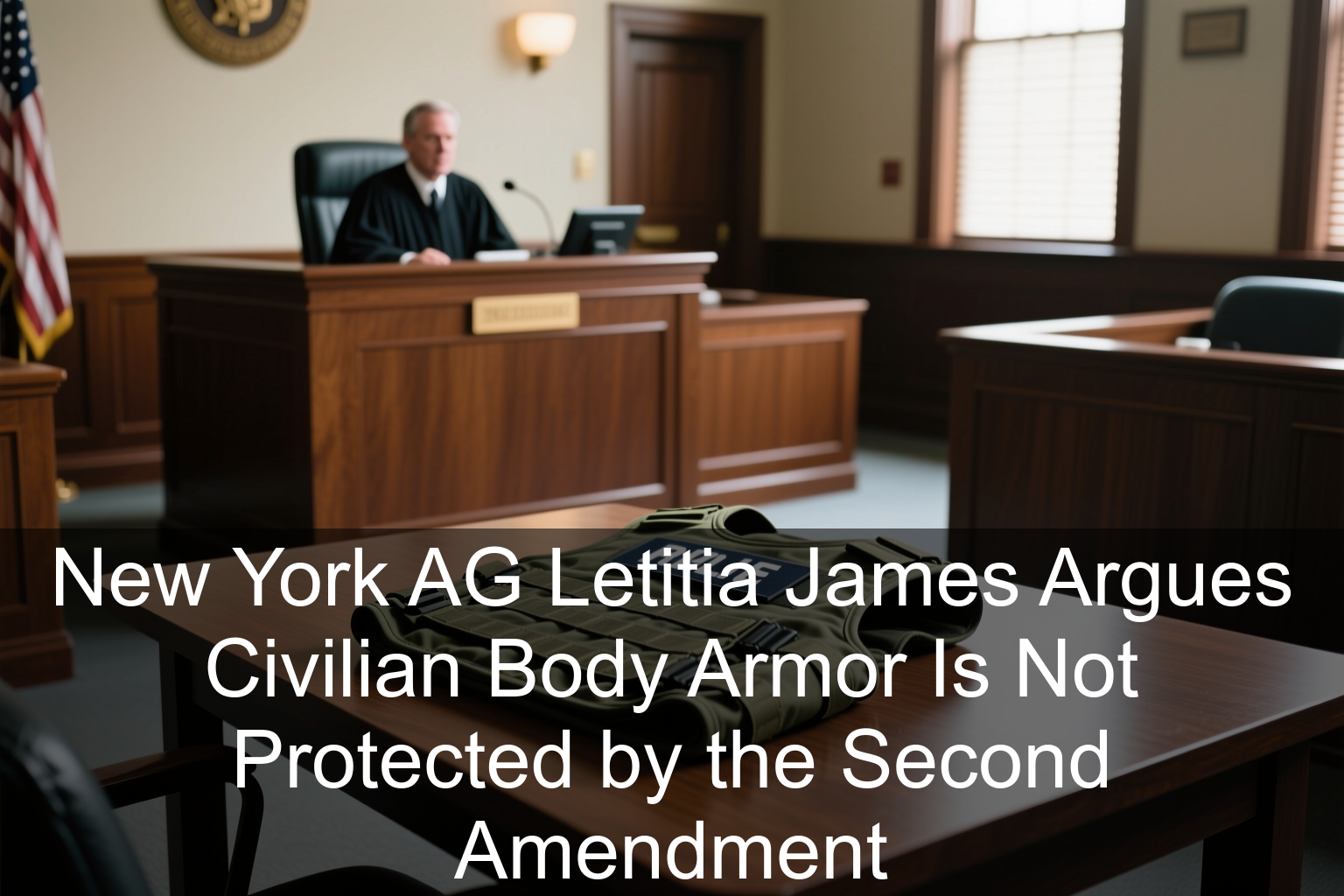
  • New York AG Letitia James Argues Civilian Body Armor Is Not Protected by the Second Amendment

    New York AG Letitia James Argues Civilian Body Armor Is Not Protected by the Second Amendment

    New York Attorney General Letitia James is asking a court to throw out a lawsuit aimed at overturning the state’s prohibition on most civilian purchases of body armor. The request is part of an ongoing legal dispute over whether protective gear used for personal safety falls within constitutional protections connected to self-defense.

    At the center of the case is a challenge brought by the Firearms Policy Coalition, which is contesting New York’s restrictions and seeking to restore access for ordinary residents. The lawsuit directly targets the state’s ban on civilian body armor purchases and frames the issue as one that should be evaluated through the lens of modern self-defense needs.

    In pressing for dismissal, James is taking the position that body armor is not covered by the Second Amendment. That argument draws a line between firearms-related rights and protective equipment, asserting that the constitutional guarantee does not extend to the purchase of armor by civilians.

    Supporters of the challenge contend that the ability to defend oneself is not limited to offensive tools and that protecting one’s life is inseparable from the broader concept of self-defense. From a libertarian perspective, restricting peaceful citizens from acquiring defensive protection shifts power away from individuals and toward the state, even as everyday people remain responsible for their own safety in unpredictable situations.

    The legal battle highlights a broader national debate about how constitutional rights apply to contemporary safety concerns. With New York fighting to keep its ban in place and the Firearms Policy Coalition pushing back in court, the outcome could shape how far governments can go in limiting access to commonly sought protective gear in the name of regulation.