
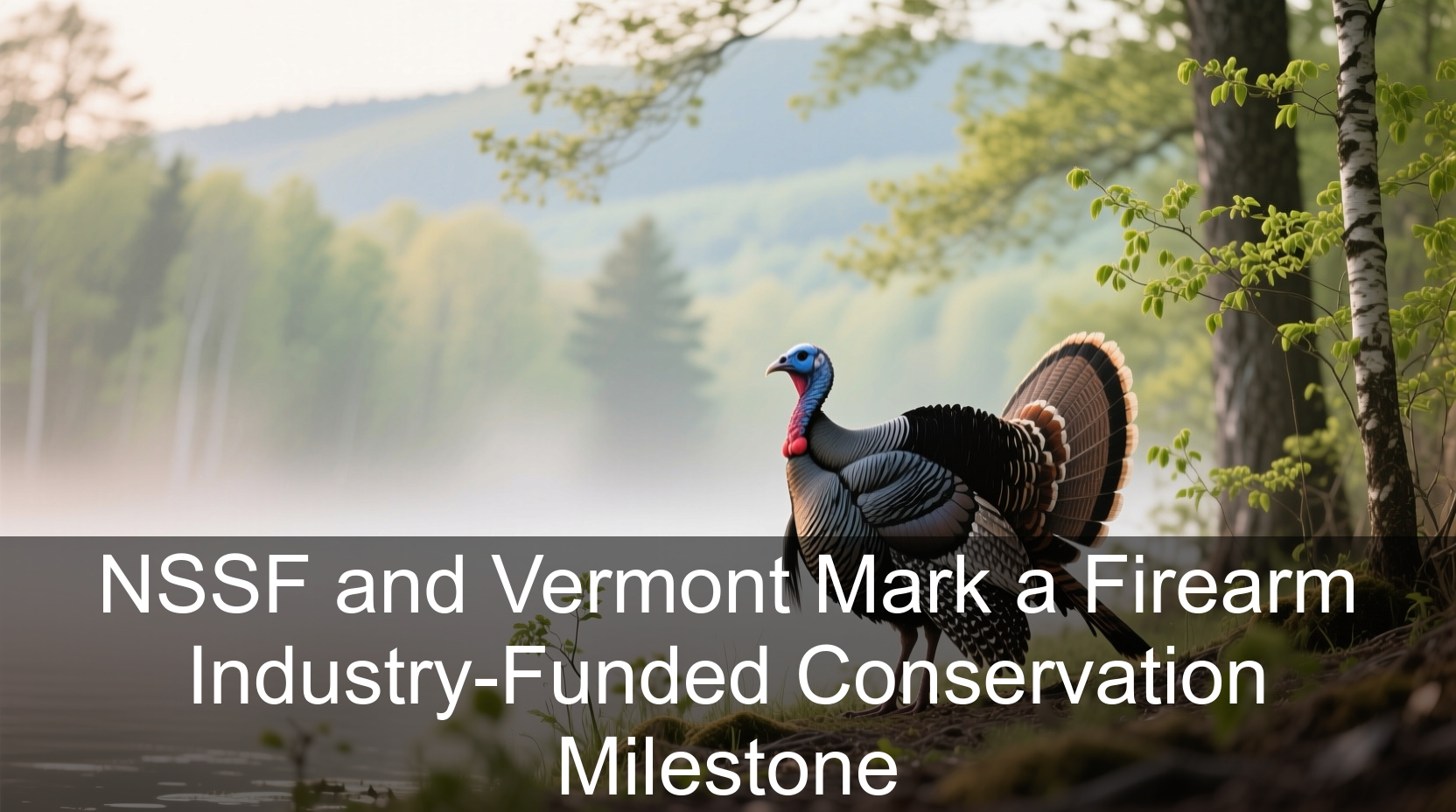

State and federal wildlife officials and conservation partners are marking a milestone this week in West Pawlet, Vermont: the long-term restoration of wild turkeys, a project that began with a small release and is now reflected in an estimated statewide population of about 50,000 birds.
At an event near the site of Vermont’s first modern reintroduction, the National Shooting Sports Foundation (NSSF) joined the U.S. Fish and Wildlife Service, the Vermont Fish and Wildlife Department, and the National Wild Turkey Federation to recognize the 1969 release that started the recovery effort. Vermont officials released 17 wild turkeys on Feb. 28, 1969. Additional releases followed in nearby Hubbardton in 1970. According to the account shared at the ceremony, relocation and restoration work continued from 1973 through 1986 to establish birds in multiple counties.
Those actions required staff time, planning, capture and transport work, and sustained monitoring by wildlife professionals. Funding for state wildlife agency work is closely tied to the Federal Aid in Wildlife Restoration Act—often called the Pittman-Robertson Act—which directs federal excise-tax revenue from firearms and ammunition into wildlife restoration and related programs through apportionments to state agencies.
Under Pittman-Robertson, an 11 percent excise tax on many firearms and ammunition products, and a 10 percent tax on handguns, is paid by manufacturers and importers. The U.S. Department of the Interior distributes these revenues to states for wildlife management and restoration projects. The NSSF statement at the event emphasized the role of these funds, along with agency and non-government organization partnerships, in supporting wildlife restoration outcomes.
The Vermont turkey effort is presented as a practical example of how that funding mechanism translates into on-the-ground results. In the late 1800s, wild turkeys had disappeared from Vermont, a change attributed to habitat loss and unregulated hunting. The 1969–1986 restoration period described by the participating organizations focused on rebuilding populations through releases and relocations. Some turkeys from later Vermont successes were also moved to other areas for additional restoration efforts.
The broader national context for these programs is also tied to Pittman-Robertson-era restoration. The source account notes that wild turkey numbers nationwide were once estimated at about 100,000 and are now estimated at about 7 million. The article also describes increases in other wildlife populations over the same historical period.
For Vermont residents and visitors, the current milestone is less about a single release than about decades of coordinated work: state and federal agency collaboration, nonprofit involvement, and a dedicated funding stream that supports habitat and species management, hunter education, public access, and recreational shooting range development and improvement. The marker unveiled in West Pawlet is intended to commemorate the long arc from the 17 birds released in 1969 to the present-day estimate of roughly 50,000 wild turkeys in the state.
Leave a Reply